RAG vs Fine-Tuning vs AI Agents: How Businesses Should Think About the Options
 September 19, 2026
 Reading time: 7 min read
 Category: Artificial Intelligence
 10
10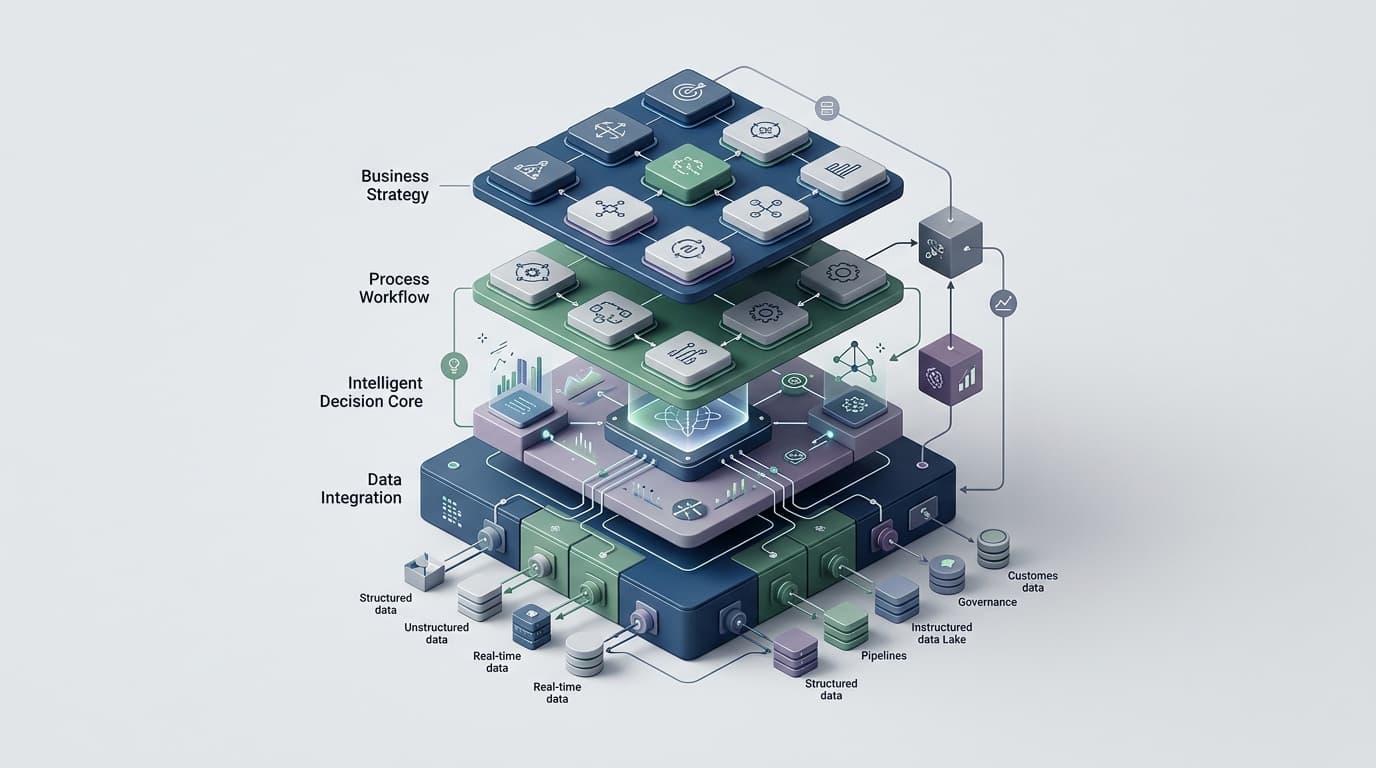
Compare RAG vs fine tuning vs AI agents for business. Analyze data freshness, control, complexity, and hybrid architectures for tech decisions.
When modern enterprises integrate large language models into their operational workflows, engineering teams quickly face a fundamental architecture question: How should enterprise data and specific business context be exposed to the AI model? Three dominant patterns have emerged across corporate software projects: Retrieval-Augmented Generation (RAG), Fine-Tuning, and autonomous AI Agents. Evaluating these options requires moving beyond industry hype to examine how each approach handles data freshness, execution control, technical complexity, evaluation frameworks, and ongoing system maintenance.
A common misconception in corporate decision-making is viewing RAG vs fine tuning vs AI agents as a mutually exclusive choice. In practice, modern enterprise deployments frequently combine these methodologies into unified architectures. Understanding the distinct business and architectural tradeoffs of each pattern allows technical leaders to select the right tool—or combination of tools—for their specific operational requirements.
Understanding the Architectural Paradigms
To establish a solid technical foundation, leaders must first distinguish how each approach alters the behavior and knowledge boundaries of a language model.
Retrieval-Augmented Generation (RAG)
Retrieval-Augmented Generation decouples knowledge storage from the model's parametric memory. Instead of training the language model on company data, a RAG system stores unstructured enterprise content—such as PDF manuals, customer service logs, or internal wikis—in an external database, typically a vector database optimized for semantic search. When a query is submitted, the system retrieves relevant data passages and injects them directly into the context window of a general-purpose foundation model as reference context. The model then synthesizes an accurate answer grounded strictly in the provided content.
Fine-Tuning
Fine-tuning is a process of further training a pre-trained base model on a specialized dataset containing domain-specific examples. This process updates the internal neural weights of the model. Fine-tuning is primarily designed to teach a model a specific style, tone, structured output format (such as precise JSON schemas), or specialized domain language (such as legal jargon or proprietary code bases). It alters how the model behaves and formats information rather than acting as a reliable dynamic database.
AI Agents
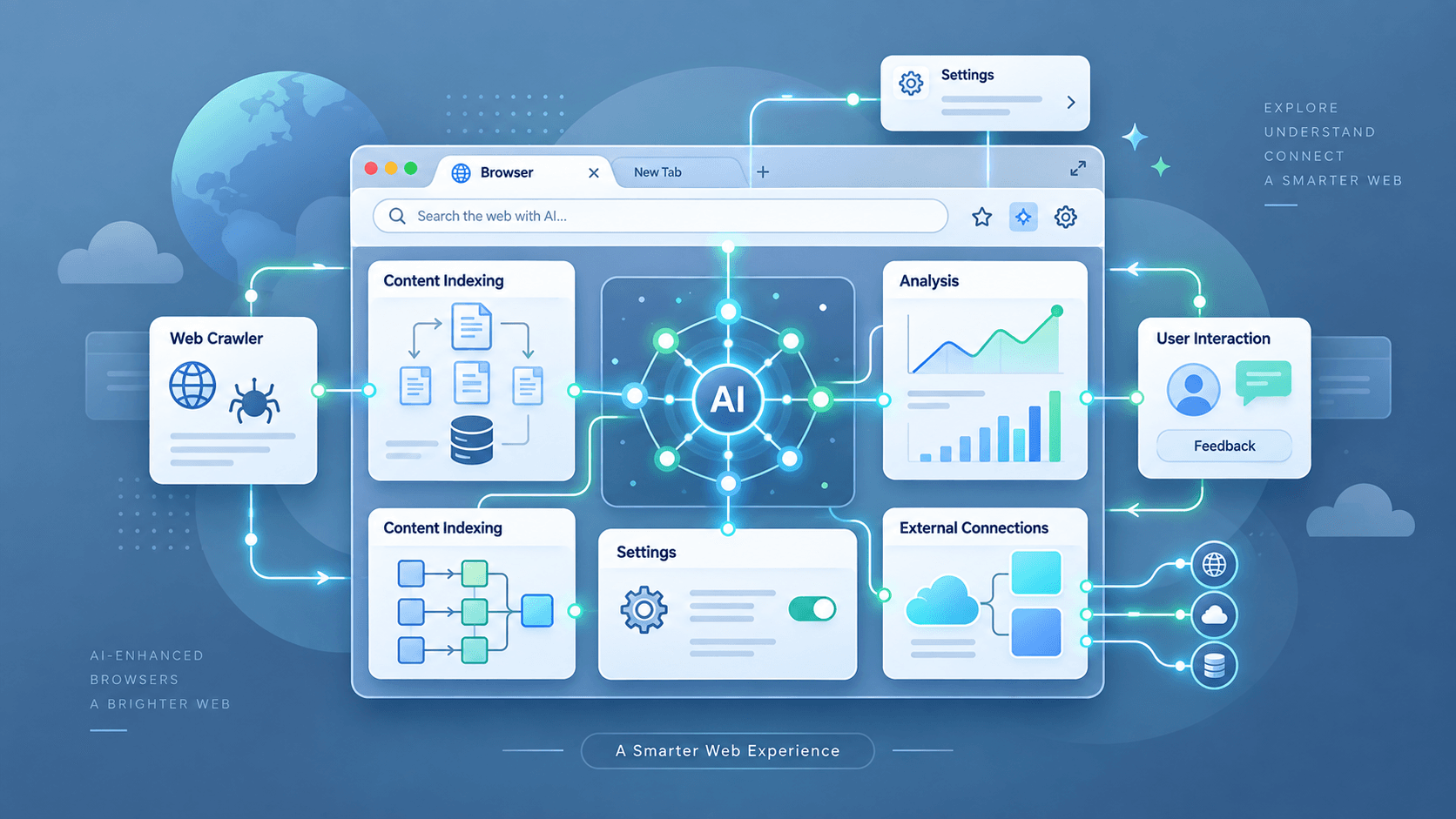
AI Agents represent a layer of orchestration built around foundation models. Rather than operating as a single input-output pipeline, an agentic system equips a language model with planning capabilities, short-term and long-term memory, and tool execution access. An AI agent can break a complex corporate task into sub-goals, query internal APIs, trigger external software actions, evaluate intermediate results, and self-correct its strategy until it achieves a defined goal. Agents frequently utilize RAG mechanisms internally to access information while performing action-oriented tasks.
Data Freshness and Dynamic Context Management
Data volatility is often the primary variable that determines architecture selection. Enterprise knowledge bases update continuously: price sheets change, product inventory fluctuates, and policy documents are revised.
RAG excels in high-volatility environments. Because data is stored externally in vector indices or relational databases, updating the enterprise system's knowledge requires only updating, inserting, or deleting document chunks in the database. The foundational model instantly gains access to updated facts on its next inference call without requiring re-training or downtime. This makes RAG the industry standard for dynamic corporate knowledge management.
Fine-tuning, conversely, provides poor data freshness. Because corporate knowledge is embedded directly into the network weights during training, updating information requires re-running fine-tuning pipelines. This process incurs GPU compute costs and validation delays. Attempting to use fine-tuning as a method for memorizing rapidly changing facts often leads to model hallucinations, where the model confidently returns outdated or blended information.
AI Agents maintain fresh contextual awareness by dynamically querying external systems via tools. An agent executing a workflow can call an internal SQL database, an enterprise CRM, or a live web service API at the exact moment information is needed, ensuring decisions are based on real-time operational data.
Execution Control, Safety, and System Complexity
Control mechanisms and system predictability vary significantly across the three paradigms, directly impacting operational risk management.
In a RAG architecture, execution control is relatively deterministic. Security teams can enforce strict Role-Based Access Control (RBAC) at the retrieval layer, ensuring users only retrieve context chunks they are authorized to view. Furthermore, grounding generation in specific context source tags makes output verification straightforward. System complexity centers on data processing pipelines, chunking strategies, embedding selection, and vector search tuning.
Fine-tuning provides deep structural control over model behavior. If an enterprise requires deterministic adherence to a complex output format or industry-specific syntax, fine-tuning provides consistent compliance across requests. However, system complexity is concentrated in data engineering: preparing clean, diverse instruction-tuning pairs requires significant human annotation and pipeline development.
AI Agents introduce non-deterministic execution loops, presenting higher complexity and governance challenges. Because an agent determines its own tool-use path, system behavior can be unpredictable. Unbounded agentic loops can lead to infinite execution paths, latency spikes, and unexpected API usage billing. Robust governance frameworks must implement strict tool boundaries, context length monitors, human-in-the-loop validation checkpoints, and timeout safeguards.
When planning robust software integrations across complex enterprise platforms, many organizations leverage specialized software, cloud, and computational capabilities provided by experienced engineering partners such as ViraaWeb to ensure robust system design.
Evaluation Frameworks and System Maintenance
Maintaining high performance over the operational lifecycle of an enterprise AI deployment requires dedicated evaluation methodologies and maintenance strategies tailored to each pattern.
RAG Evaluation and Maintenance: Evaluation requires measuring both retrieval accuracy and generation fidelity (often termed RAG Triad: context relevance, groundedness, and answer relevance). Maintenance focuses on database index hygiene, managing embedding model upgrades, and optimizing prompt templates as foundational models evolve.
Fine-Tuning Evaluation and Maintenance: Evaluation involves benchmarking candidate models against holdout test datasets using standard metrics and domain-specific human evaluations. Maintenance involves monitoring for catastrophic forgetting (where a fine-tuned model loses general reasoning capabilities) and re-running fine-tuning jobs whenever base foundational models receive major vendor updates.
AI Agent Evaluation and Maintenance: Evaluation focuses on goal completion rates, tool-call accuracy, trajectory efficiency, and safety compliance. Maintenance requires monitoring external API integrations for breaking changes, updating prompt instructions, and refining state management algorithms over time.
Architectural Comparison Matrix
The following structural matrix summarizes key engineering and management criteria across all three technical approaches:
Retrieval-Augmented Generation (RAG): Best for dynamic knowledge retrieval; low update cost; high factual transparency; medium implementation complexity; relies on external vector databases and retrieval engines.
Fine-Tuning: Best for specialized formatting, style adaptation, and task-specific efficiency; high update cost for fast-changing facts; lower context window requirements; high initial engineering complexity for dataset creation.
AI Agents: Best for multi-step reasoning, workflow automation, and active tool orchestration; execution cost variable based on step count; dynamic context integration; highest system complexity and governance burden.
Composite Architectures: The Hybrid Reality
Leading enterprise implementations rarely choose just one pattern in isolation. Instead, modern AI system engineering combines these paradigms to leverage their distinct strengths while mitigating individual trade-offs.
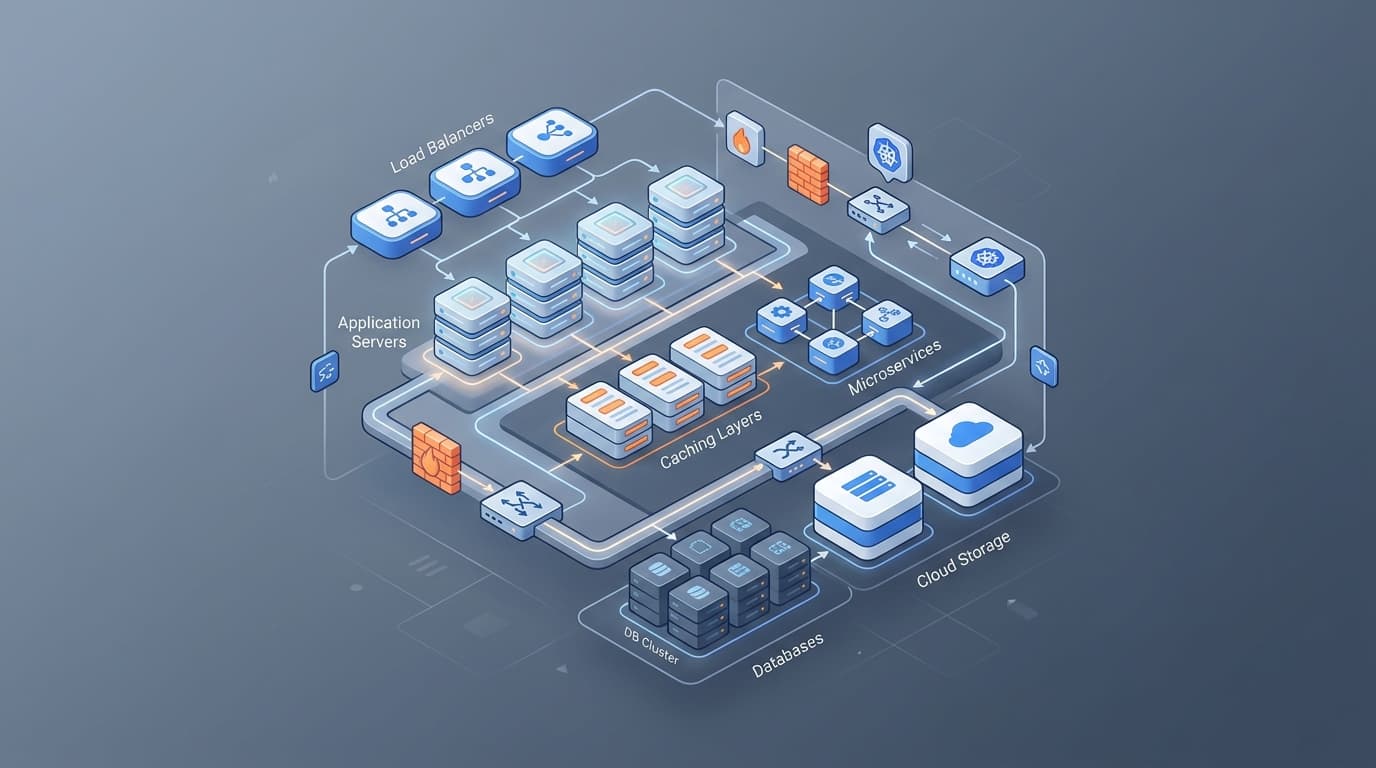
Consider a realistic enterprise application: a financial services advisor platform. An enterprise might start with a fine-tuned base model that has been trained specifically to understand specialized financial vocabulary, strict regulatory formatting guidelines, and concise executive reporting styles. This fine-tuned model is then integrated into a RAG pipeline, allowing it to retrieve real-time market data, dynamic client portfolio records, and contemporary research reports. Finally, an agentic framework wraps around this system, giving the assistant the ability to independently trigger portfolio rebalancing calculators, send draft reports to legal compliance endpoints, and schedule client follow-up notifications.
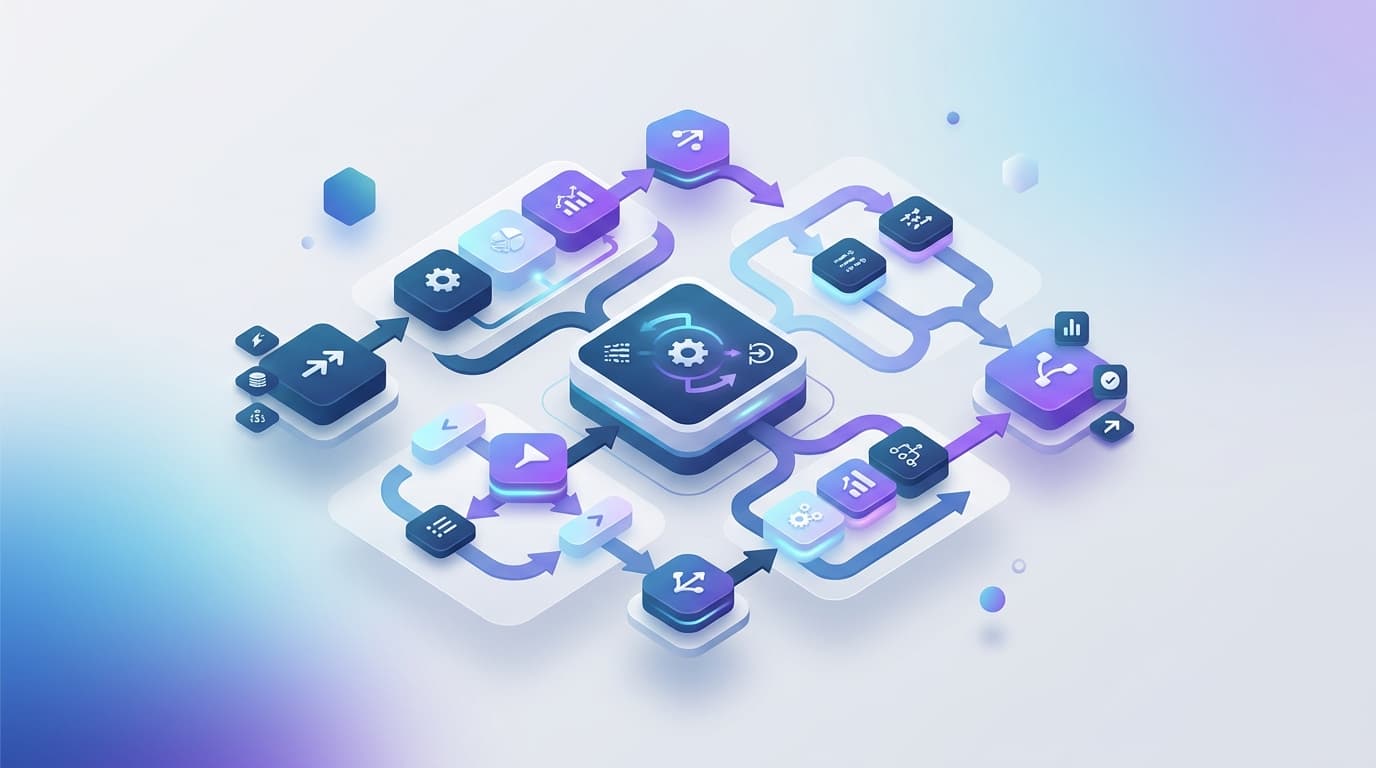
By treating RAG, fine-tuning, and AI agents as complementary capabilities within a cohesive architecture, organizations achieve maximum operational flexibility, maintain high factual precision, and enforce rigorous governance standards.
Summary and Strategic Action Plan
Selecting the optimal technical approach requires aligning engineering resources with specific business requirements. Organizations should avoid defaulting to complex fine-tuning or full autonomous agency when simpler, highly deterministic RAG architectures satisfy operational goals. Begin by evaluating the update frequency of your data, the strictness of your required output formatting, and whether your use case requires passive information synthesis or active workflow execution. By adopting a modular architecture that combines retrieval, custom behavioral tuning, and agentic orchestration where necessary, businesses can build scalable, verifiable, and future-ready enterprise AI platforms.
Frequently Asked Questions
When should a company choose RAG over Fine-Tuning?
Choose RAG when your primary requirement is accessing dynamic, rapidly changing facts, verifying source attribution, or enforcing strict data access controls. RAG is generally faster to deploy and significantly cheaper to keep up to date than fine-tuning.
Can Fine-Tuning replace the need for a database or knowledge retrieval system?
No. Fine-tuning is not an effective mechanism for factual data storage. It updates how a model processes inputs and structures outputs, but relying on it for factual recall often leads to outdated information and increased hallucinations.
What is the main challenge when deploying AI Agents in production?
The main challenge is managing non-deterministic behavior and execution safety. Unbounded agents can incur unpredictable costs, call APIs incorrectly, or fail to complete multi-step tasks without strict loop limitations, state monitoring, and human oversight.
Is it possible to combine RAG, Fine-Tuning, and AI Agents in one project?
Yes. Combining these three approaches is common in mature enterprise deployments. A system can utilize a fine-tuned model for specialized formatting, embedded within a RAG engine for factual knowledge, and orchestrated by an AI agent to execute multi-step business workflows.