Cloud Architecture for Scalable Ecommerce: The Components That Matter
 September 16, 2026
 Reading time: 7 min read
 Category: Cloud Infrastructure
 15
15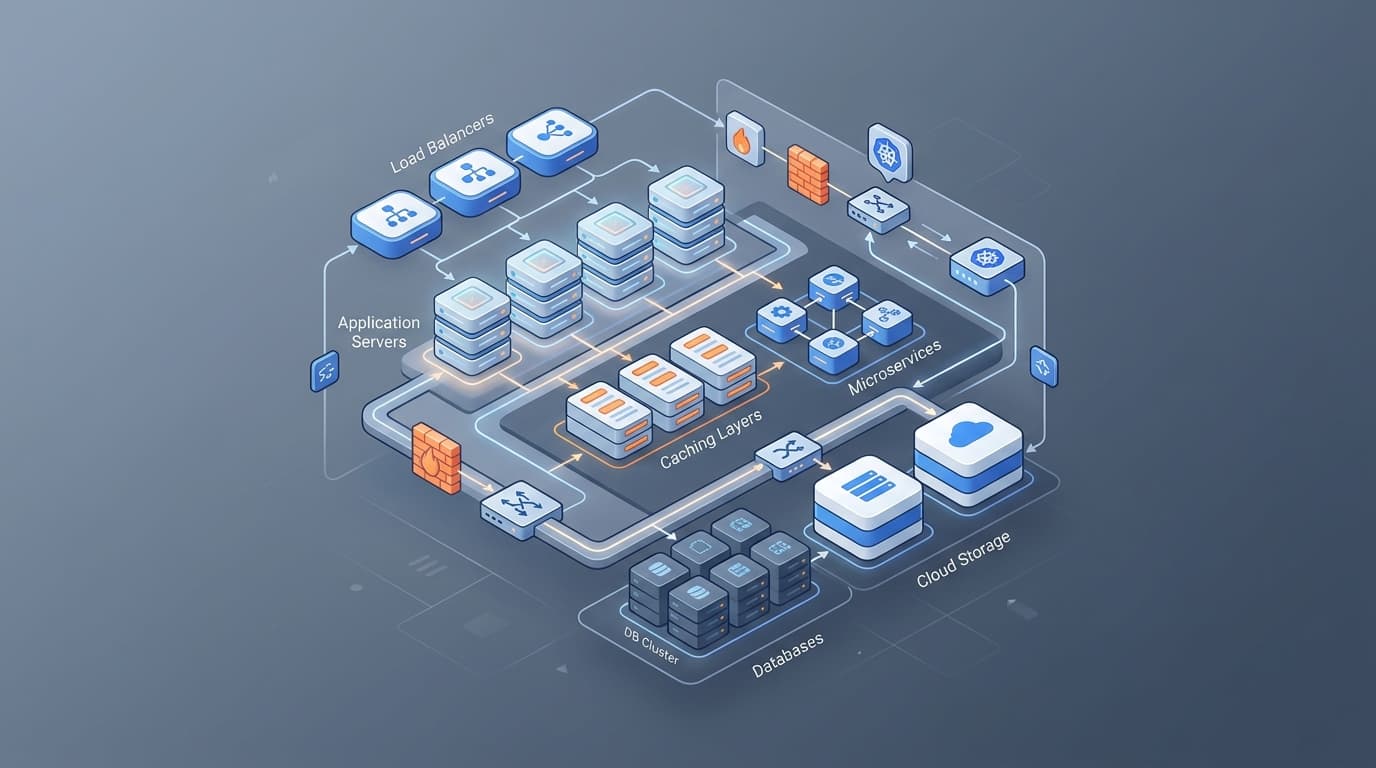
Learn key strategies for cloud architecture for ecommerce. Explore CDN, multi-layer caching, database scaling, microservices, and queue management.
When an ecommerce store experiences sudden traffic spikes—whether driven by seasonal promotions, viral marketing campaigns, or unexpected media coverage—the underlying infrastructure faces a critical test. Without a resilient cloud architecture for ecommerce, surges in concurrently active buyers lead to slow page load speeds, failed checkout sessions, dropped transactions, and ultimate revenue loss. Digital decision-makers must move beyond basic cloud hosting and construct a modular, decoupled infrastructure designed for high availability, fault tolerance, and cost efficiency.
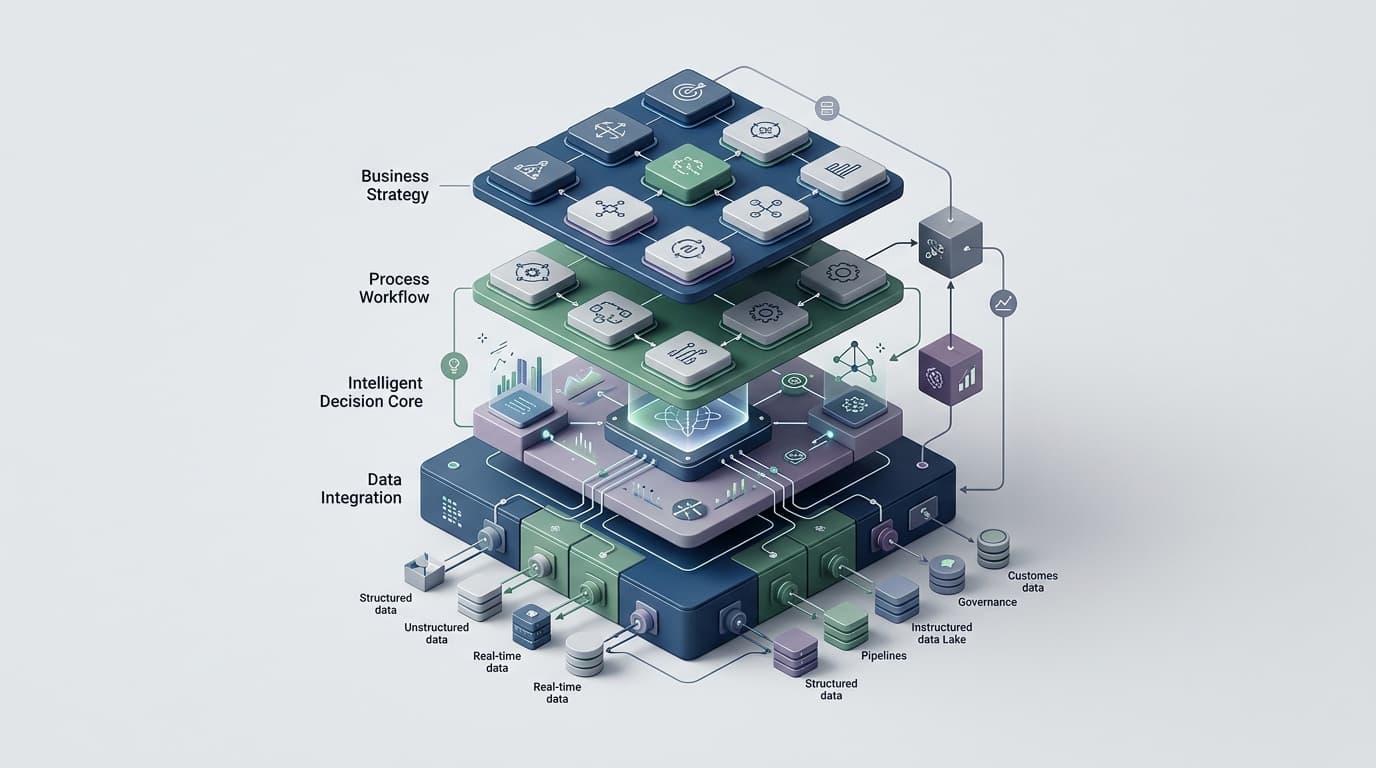
Designing an enterprise-grade cloud environment requires balancing multiple engineering components to maintain low latency and operational stability. In this article, we examine the core building blocks of a high-performance cloud architecture, offering strategic guidance for business leaders and technical teams looking to build scalable online shopping platforms.
Edge Computing and Content Delivery Networks (CDNs)
The journey of an online customer begins at the network edge. A Content Delivery Network (CDN) is a distributed network of proxy servers geographically deployed to serve assets to users from the closest possible physical location. For modern ecommerce environments, the CDN serves as the first line of defense against infrastructure overload and network latency.
Beyond delivering static assets such as product images, stylesheets, and JavaScript files, modern edge networks perform advanced computations. Static asset offloading reduces origin server traffic by up to 80%, while dynamic content acceleration uses optimized routing protocols to speed up personalized payload delivery. Edge logic, such as geographic routing, security filtering, and image optimization on-the-fly, minimizes latency before a request ever reaches your core application servers.
Multi-Layered Caching Strategies
Caching is the single most effective mechanism for achieving horizontal scale in ecommerce applications. Because database queries are computationally expensive, storing frequently accessed data in high-speed, volatile memory dramatically reduces processing overhead.
Browser and Edge Caching: Stores static assets directly on client devices or CDN nodes, eliminating unnecessary HTTP requests.
Application Caching (In-Memory Stores): Utilizes memory key-value stores like Redis or Memcached to keep frequently read product catalog data, session states, and pricing logic ready for instant retrieval.
Database Query Caching: Caches raw query results to prevent identical complex join queries from executing repeatedly on relational database engines.
The primary challenge in caching strategies lies in cache invalidation. Inventory levels and flash sale prices change rapidly; implementing robust cache-tags and event-driven invalidation logic ensures buyers always see accurate product availability without sacrificing page speed.
Application Scaling: Vertical vs. Horizontal
When computing demands fluctuate, application services must scale accordingly. Monolithic systems historically relied on vertical scaling—upgrading CPU, memory, or storage on a single machine. However, vertical scaling introduces hard physical limits, cost inefficiency, and significant downtime risks.
Horizontal scaling, conversely, adds more application instances into a load-balanced pool. By decoupling application components into stateless containers (using microservices or modular architectures), teams can automatically scale individual business services independently based on incoming demand metrics like CPU utilization or queue depth.
Stateless architecture is a prerequisite for seamless horizontal auto-scaling. User session data must be managed centrally in distributed stores rather than bound to a specific server instance, allowing any container to serve any incoming customer request without disruption.
Database Architecture and Storage Optimization
While application instances can scale horizontally with ease, relational databases often present the primary bottleneck in cloud architecture for ecommerce. The database must handle heavy read traffic (customers browsing products) alongside high-concurrency transactional writes (customers placing orders and updating inventories).
To mitigate performance bottlenecks, modern infrastructure designs segregate read and write operations:
Read Replicas and Query Segregation
By routing read operations to dedicated secondary database replicas, the primary database instance is freed to handle high-priority write operations. Changes made to the primary database asynchronously replicate to read nodes in near-real-time.
Database Sharding and Partitioning
When database size grows exponentially, horizontal sharding distributes data subsets across separate physical database instances based on key parameters, such as customer geography or category IDs. This prevents index bloat and keeps execution plans performant.
Polyglot Persistence
Enterprise platforms frequently adopt multiple database technologies tailored to specific domain requirements. While relational databases (like PostgreSQL or MySQL) remain ideal for transactional consistency during checkout, document databases or specialized search engines excel at complex product catalog indexing and search queries.
Asynchronous Queues and Event-Driven Workflows
During peak checkout events, synchronous processing—where a system waits for one operation to complete before initiating the next—causes cascading delays. Processing payment verification, transactional emails, ERP inventory updates, and logistics API calls within the immediate checkout loop degrades response times and increases failure rates.
Implementing asynchronous queues decouples synchronous customer interactions from background tasks. When a customer completes an order, the system instantly writes the order payload to a lightweight messaging broker (such as RabbitMQ or Apache Kafka) and returns a success confirmation to the shopper.
Background worker services process the queued jobs independently. If a third-party logistics platform or email provider experiences an outage, the queue retains the message and retries automatically without affecting the buyer's checkout experience.
Observability, APM, and System Telemetry
Scalable cloud architectures require complete visibility into system health. Traditional server monitoring is insufficient for modern distributed cloud environments; organizations must invest in full-stack observability encompassing metrics, logs, and distributed tracing.
Application Performance Monitoring (APM) tools track end-to-end transaction flows, enabling engineers to identify latency bottlenecks, failing third-party APIs, or unoptimized database queries before they cause widespread downtime. Comprehensive logging platforms consolidate distributed logs into unified analytics dashboards, providing immediate root-cause analysis during unexpected incidents.
Failure Isolation and System Resilience
In distributed system design, component failure is inevitable. High-availability cloud architecture focuses on containing failures so that a localized system fault does not trigger a catastrophic platform outage.
Implementing design patterns like Circuit Breakers automatically cuts connections to failing external services (such as a slow payment gateway or address validation service) and routes requests to fallback pathways. Graceful degradation ensures that if a non-critical feature fails—such as the personalized product recommendation engine—the primary commerce flow remains functional, allowing customers to complete their purchases.
When planning robust cloud setups, aligning technical choices with business growth requires specialized execution; collaborating with experienced teams in custom ecommerce development ensures your software and cloud infrastructure are designed to handle peak demand securely and efficiently.
Automated Backups and Disaster Recovery Strategies
Data loss or extended cloud region outages represent severe risks to enterprise commerce businesses. A comprehensive cloud strategy mandates automated point-in-time database snapshots, cross-region replication, and routinely tested disaster recovery plans.
Businesses must clearly define two fundamental metrics: Recovery Point Objective (RPO), which dictates the maximum acceptable age of restored data, and Recovery Time Objective (RTO), which establishes the maximum allowable duration of system downtime. Automated deployment pipelines and infrastructure as code (IaC) ensure that complete operational environments can be reprovisioned in alternative cloud availability zones automatically if a primary datacenter fails.
Conclusion: Building for Growth
A performant cloud architecture for ecommerce is not built by applying quick fixes during peak sales seasons. It requires a strategic, layered approach built upon edge delivery, aggressive caching, decoupled microservices, asynchronous processing, and robust database strategies. By prioritizing resilience, observability, and modularity, business owners and digital leaders can build high-converting ecommerce platforms capable of turning unpredictable traffic spikes into sustained revenue generation.
Frequently Asked Questions
What is the difference between vertical and horizontal scaling in cloud architecture?
Vertical scaling involves adding more power (CPU, RAM) to an existing single server instance. Horizontal scaling involves adding more server or container instances into a load-balanced network. Horizontal scaling offers far greater flexibility, fault tolerance, and availability for high-traffic ecommerce applications.
Why is a database usually the main performance bottleneck during peak traffic?
While front-end servers handle stateless requests easily, relational databases must maintain ACID compliance and data consistency during concurrent read and write operations. High volumes of simultaneous orders cause lock contention, index bloat, and slow query execution unless read replicas or caching layers are implemented.
How do asynchronous queues protect an ecommerce site during flash sales?
Asynchronous queues offload non-critical post-checkout actions—like sending confirmation emails, notifying third-party ERPs, or updating logistics APIs—out of the immediate customer checkout path. The customer gets an immediate order confirmation, while background processing handles secondary workflows without overloading application servers.
What role does a CDN play beyond serving images?
Modern edge CDNs provide intelligent routing, SSL termination, web application firewall (WAF) security filtering, dynamic content acceleration, and edge-side scripting. They absorb malicious traffic and reduce server requests before incoming data reaches core database and application infrastructure.