The Web Is Becoming AI-Native: What Businesses Should Prepare For
 September 15, 2026
 Reading time: 9 min read
 Category: Tech News
 28
28
Discover how the AI native web is transforming discovery, conversational UI, and search visibility. Learn key steps to prepare your digital strategy.
The architecture of the World Wide Web is undergoing its most profound structural realignment since the shift to mobile-first responsive design. For three decades, the web operated primarily on a index-and-retrieve model: search engines crawled static or dynamically rendered pages, cataloged text, and directed human users through hyperlinked paths to original source material. Today, as generative artificial intelligence models shift from backend analytical tools to primary user interfaces, the foundational mechanics of web discovery, interaction, and content architecture are changing. We are entering the era of the AI native web—a landscape where websites must serve synthetic intelligence agents with the same precision and responsiveness historically reserved for human visitors and traditional search crawlers.
For enterprise leaders, digital strategists, and technology executives, this shift extends far beyond adopting a chatbot plugin or adding AI-generated summaries to corporate blogs. Transitioning to an AI native web requires rethinking how enterprise systems structure data, expose API endpoints, optimize for conversational intent, and maintain brand authority across mediated interfaces where users may never directly land on a traditional webpage.
Understanding the Architectural Shift to an AI Native Web
An AI native web refers to a digital ecosystem where web platforms, underlying data architectures, and user interfaces are built around the capabilities and interaction patterns of artificial intelligence. In a legacy web environment, human users execute structured queries within search engines, scan lists of links, land on target URLs, and navigate visual menus to retrieve information or execute transactions. The infrastructure is visual, manual, and explicit.
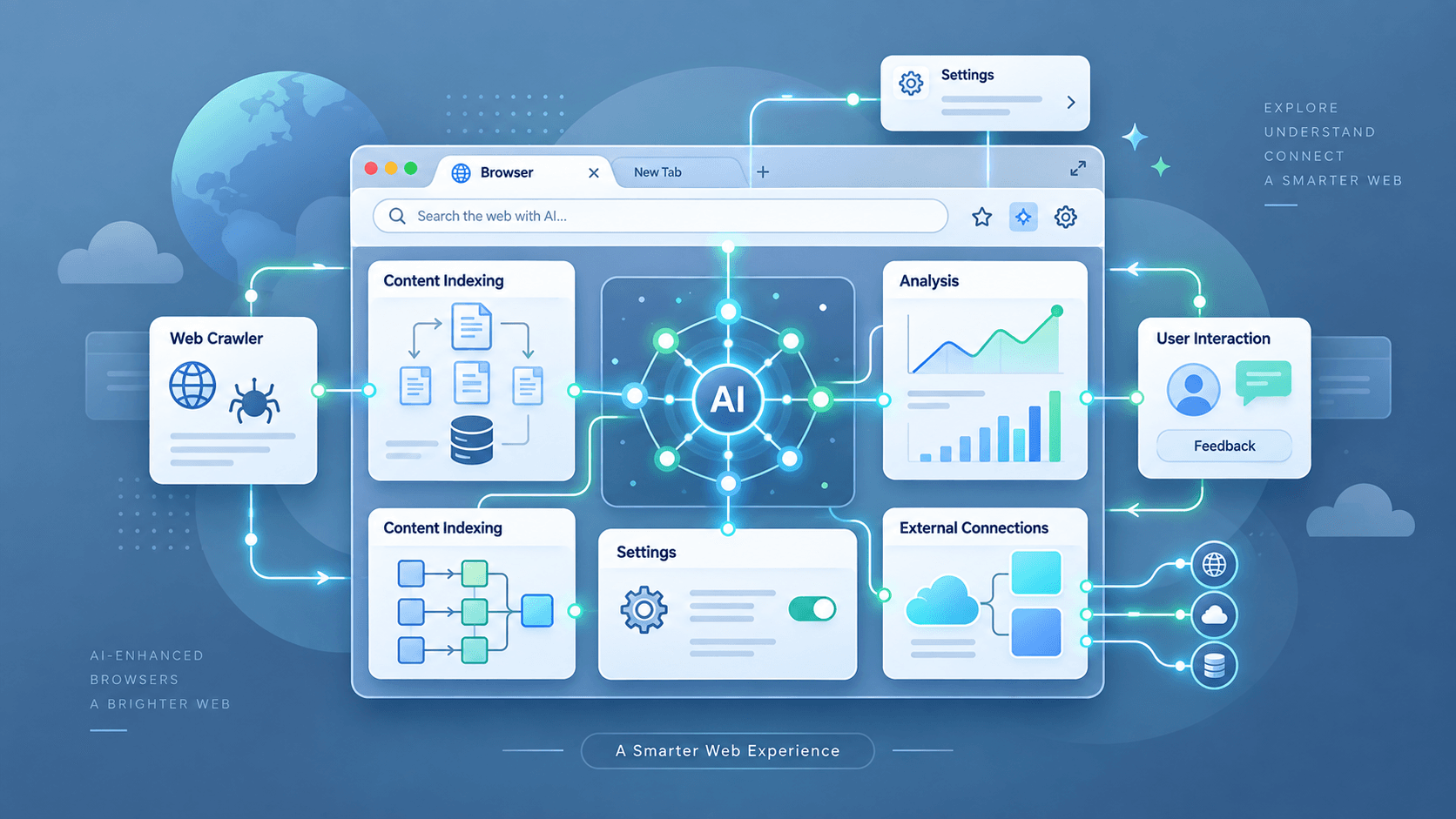
In contrast, an AI native framework positions intelligent agents—ranging from large language model search engine integrations to autonomous task execution agents—as intermediaries between the web entity and the user. The primary touchpoint shifts from direct visual navigation to synthesized natural language outputs, dynamic functional responses, and programmatic API interactions. This shift requires organizations to manage two distinct frontends: the visual frontend designed for human emotional engagement and intuitive interaction, and the semantic frontend designed for machine comprehension, deterministic data extraction, and programmatic execution.
Key Architectural Differences: Legacy Web vs. AI Native Web
Discovery Paradigm: Legacy web relies on keyword matching, backlink graphs, and algorithmic rank indexing. The AI native web relies on semantic vector spaces, contextual embeddings, and real-time knowledge retrieval.
User Interface: Legacy web relies on static graphical user interfaces (GUI), standardized site maps, and explicit navigation menus. The AI native web prioritizes conversational user interfaces (CUI), conversational agents, and dynamically rendered intent-focused components.
Content Consumption: Legacy web counts direct session page views, impression metrics, and click-through rates (CTR). The AI native web operates through zero-click information synthesis, mediated dynamic responses, and API-driven transactional fulfillment.
Data Structuring: Legacy web utilizes basic HTML tags, open-graph metadata, and basic search schema. The AI native web requires rich semantic schemas, granular microdata, public functional specifications, and structured API endpoints.
Conversational Interfaces and the Evolution of Digital Interaction
As conversational agents become primary operating environments, traditional digital navigational structures are experiencing significant friction. Modern web users increasingly expect to articulate complex, multi-variable intent in natural language rather than navigating complex submenus or filling out rigid static forms.
Integrating intelligent conversational interfaces directly into web applications represents the immediate client-facing phase of this transition. However, effective conversational implementation goes deeper than deploying off-the-shelf widget scripts overlaying existing pages. Web platforms designed for an AI native environment must integrate conversational interfaces deeply into core enterprise business logic, CRM databases, inventory systems, and cloud infrastructure.
Building High-Utility Conversational Systems
To deliver real enterprise value, conversational interfaces within an AI native web model must operate deterministically where accuracy is critical, while leveraging non-deterministic natural language capabilities for comprehension and dialogue fluency. Technology teams preparing their digital platforms must prioritize key architectural elements:
Contextual State Management: Ensuring conversational interfaces preserve state across session boundaries, cross-platform touchpoints, and authentication states so users do not have to repeat context.
Hybrid Retrieval Architectures: Combining vector search databases for contextual understanding with structured relational database queries to guarantee precise real-time pricing, stock availability, and account data.
Action-Oriented Functional Calling: Empowering conversational agents to perform actual backend transactions—such as scheduling consultations, generating custom enterprise quotes, or modifying account parameters—via secure function calls.
Changes in Content Visibility: Navigating Search Optimization and Information Synthesis
The rise of the AI native web fundamentally alters how business content is discovered, evaluated, and displayed across digital channels. Traditional search engine optimization focused heavily on rank positions on engine result pages. Today, the rapid growth of generative engines and AI-driven answer environments means digital visibility relies on whether a brand's data is accurately ingested, synthesized, and cited within AI-generated responses.
This shift requires digital marketing and technology teams to expand traditional SEO strategies into AI Search Optimization (AEO) and Generative Engine Optimization (GEO). When an intelligent agent answers a user query regarding industry solutions, product specifications, or enterprise services, it does not evaluate pages based on keyword density alone. Instead, it measures semantic clarity, authority markers, structured context, and factual verifiability across its training vector space and real-time retrieval-augmented generation (RAG) pipelines.
Strategies for Maintaining Synthetic Content Visibility
To ensure content remains visible, accurate, and authoritative within AI search tools and synthesis engines, businesses must systematically optimize their web property data layer:
Implement Deep Semantic Schema: Standardize technical data structures using comprehensive JSON-LD schemas. Explicitly define entities, relationships, capabilities, leadership profiles, and enterprise offerings to remove ambiguity during programmatic parsing.
Structure Content for Entity Retrieval: Format long-form technical literature, research, and documentation with clear heading hierarchies, direct factual summaries, logical data tables, and explicit context blocks optimized for RAG chunking algorithms.
Maintain Factual Consistency Across Digital Datasets: Ensure underlying core corporate facts, product features, pricing models, and service technical specs are consistent across official web properties, press releases, developer documentation, and public repositories. Discrepancies reduce an engine's confidence score when generating factual answers.
Optimize for Intent Depth Over Keyword Volume: Publish comprehensive content that directly addresses complex, nuanced professional scenarios rather than surface-level introductory articles targeted at high-volume broad keywords.
Preparing Technical Infrastructure and Data Architecture
Transitioning an enterprise to operate efficiently within an AI native web requires underlying modernizations to cloud infrastructure and API capabilities. Web platforms built on legacy monolithic architectures, unoptimized content management platforms, or slow backend environments will struggle to keep pace with modern intelligent agent requirements.
Intelligent discovery systems require rapid response times when accessing external endpoints during real-time generation routines. High latency, unhandled edge cases, or unreadable client-rendered JavaScript frameworks can cause automated systems to bypass a digital entity entirely in favor of faster, more accessible sources.
Core Technical Initiatives for Digital and Engineering Teams
Organization leaders preparing their web platforms should direct their digital and technical teams toward several core modernization initiatives:
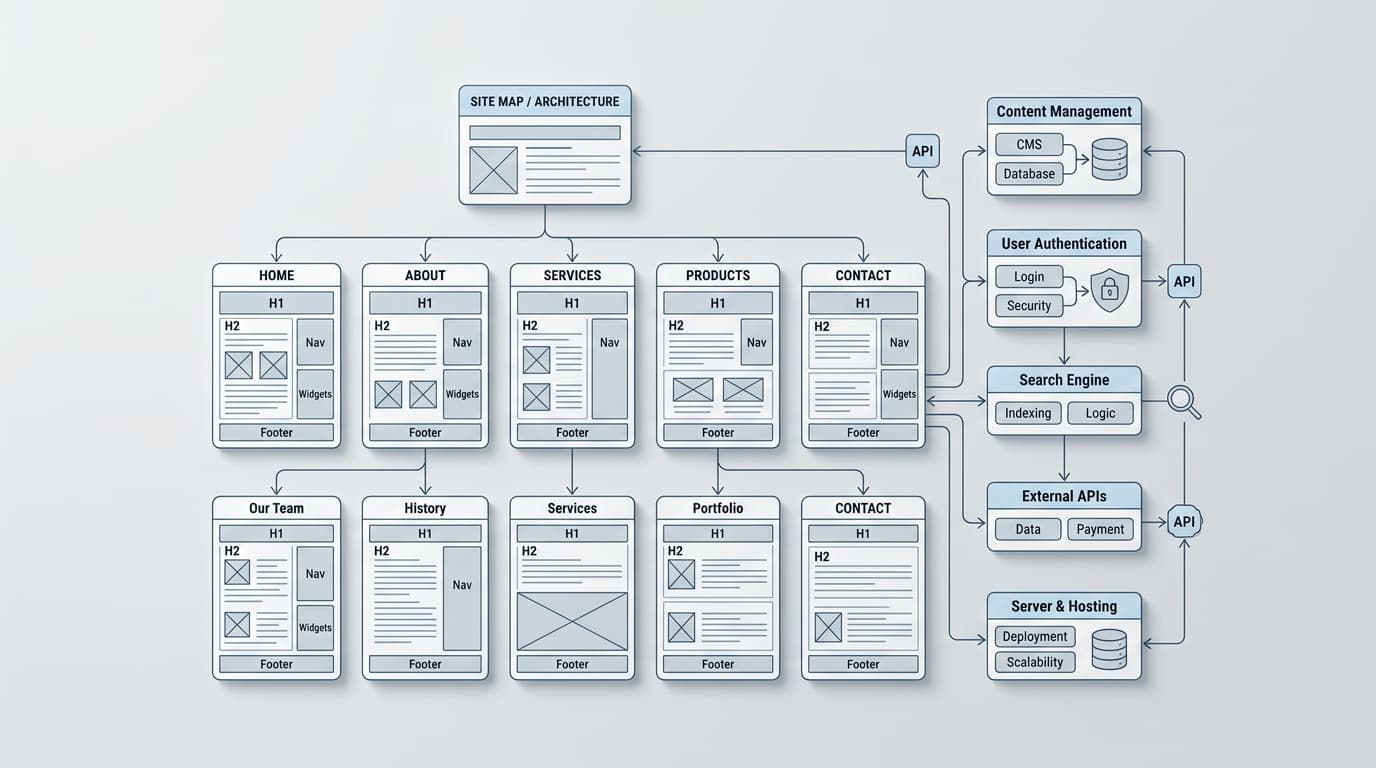
Adopt Headless and API-First Architecture: Decouple the backend content repository from the presentation layer. Exposing structured content via clean RESTful or GraphQL APIs enables human frontends, mobile applications, and machine agents to consume identical single-source-of-truth enterprise data reliably.
Optimize Server-Side Rendering (SSR): Ensure critical platform data, product catalogs, and corporate knowledge bases are fully rendered on the server side. Relying heavily on complex client-side execution can prevent simple web scraping agents and indexing pipelines from reading content accurately.
Develop Machine-Readable Specifications: Maintain comprehensive Open API documentation, standardized schema files, and machine-friendly manifest files (such as AI plugin configurations) to allow external autonomous agents to safely discover enterprise capabilities.
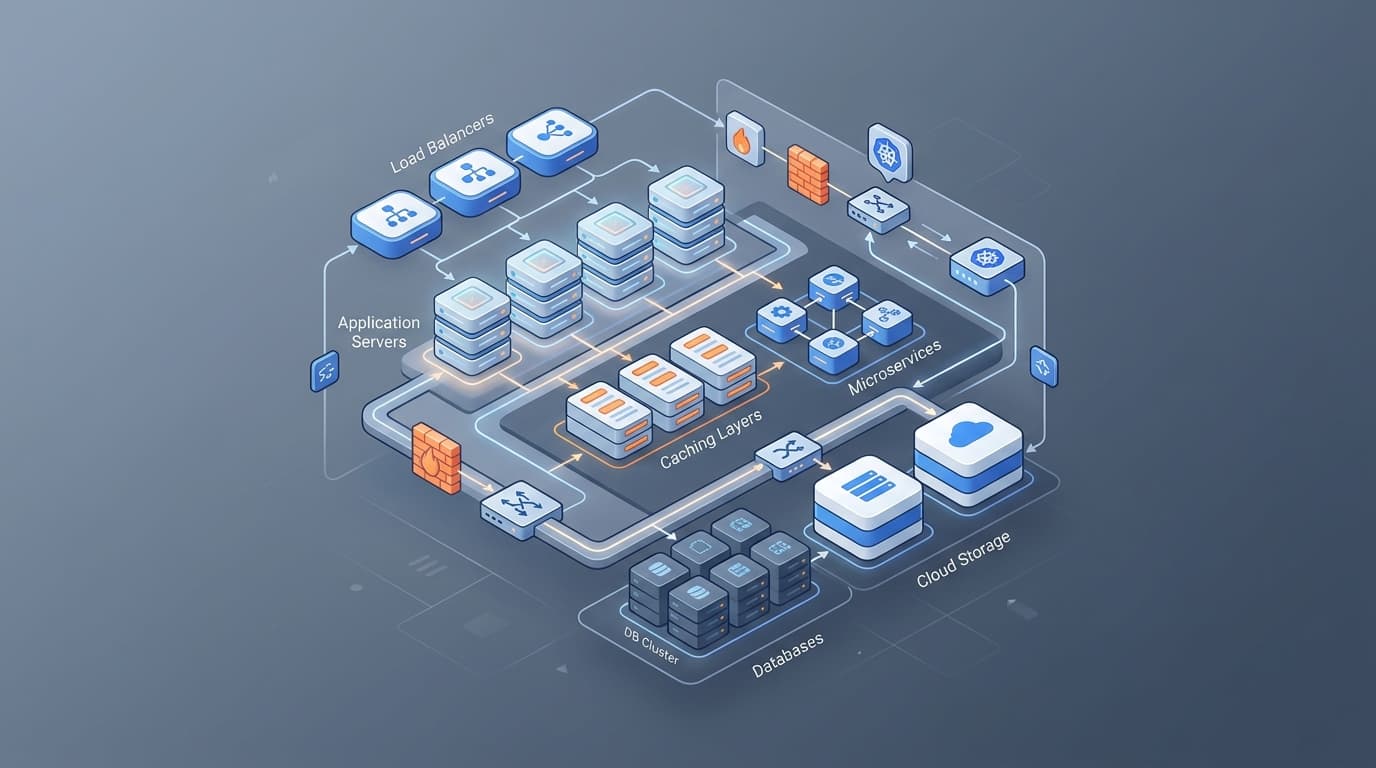
Strengthen Infrastructure Resilience and Security: Prepare cloud infrastructure for non-human traffic spikes. AI crawlers, automated synthesis tools, and agent requests generate unique load patterns. Implement robust web application firewalls (WAF), rate-limiting rules, and edge caching mechanisms to maintain reliability without blocking legitimate indexing agents.
Strategic Roadmap: Preparing Your Organization for the AI-Native Web
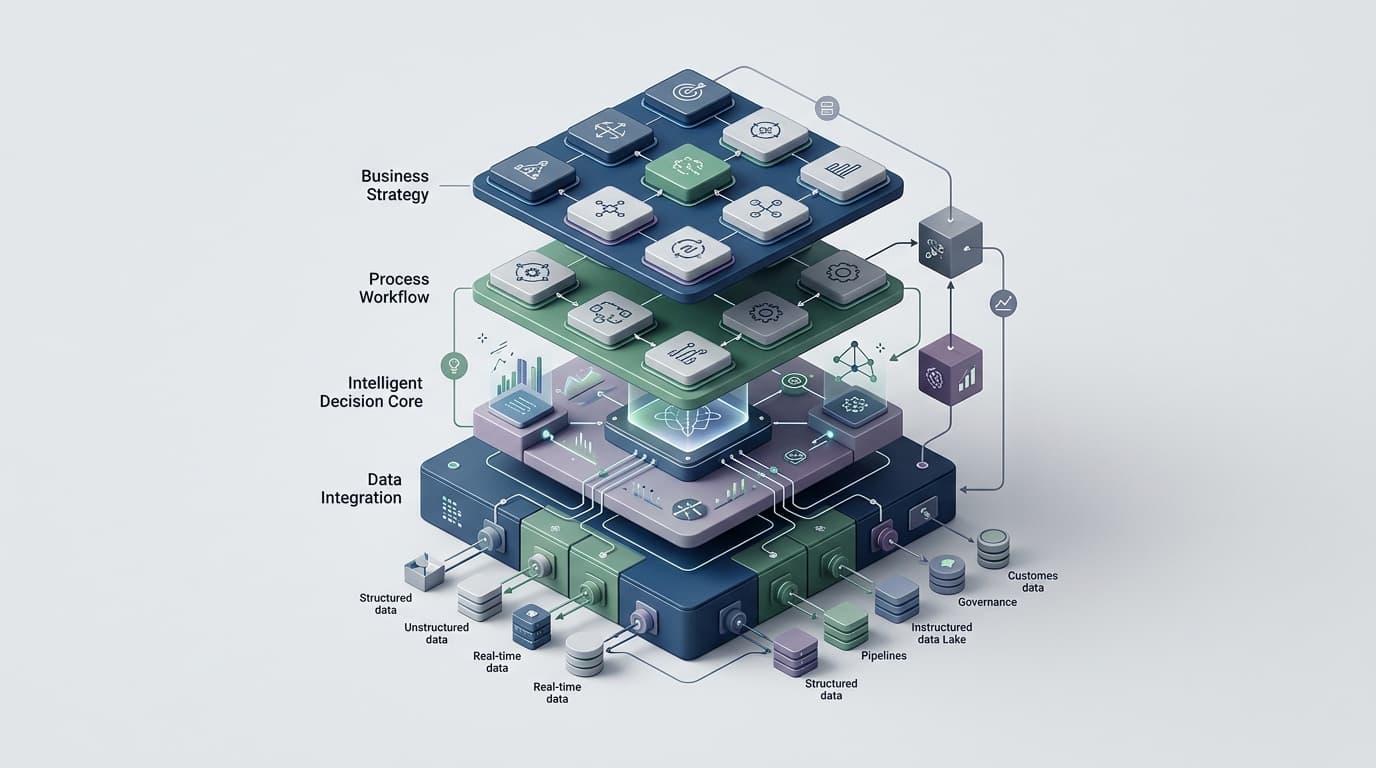
Adapting to an AI native web is not an overnight technical transformation; it requires coordinated action across enterprise leadership, digital marketing, software development, and infrastructure teams. Organizations that take proactive steps to modernize their web footprint today will establish significant operational advantages in customer acquisition cost, brand authority, and automated channel efficiency.
A practical strategic roadmap for digital leadership includes three prioritized phases:
Phase 1: Auditing and Structuring Foundational Data
Begin by evaluating existing web assets through a machine-readability lens. Conduct a technical schema audit to verify that all core business entities, services, and location structures are accurately tagged. Ensure that high-value business insights, product technical sheets, and customer support documentation are structured logically to facilitate clear machine extraction.
Phase 2: Modernizing Integration and Interface Layers
Transition web properties toward API-first content delivery models. Implement intelligent conversational interfaces across high-intent conversion pathways, ensuring these systems connect directly to CRM engines and transactional backend logic. Focus on reducing latency across all server endpoints and refining real-time content delivery networks.
Phase 3: Continuous Monitoring and AI Visibility Optimization
Establish monitoring workflows designed to track brand presence within synthetic answer platforms and AI engines. Regularly audit how generative platforms describe your products, services, and corporate positioning. Iterate on content structure, entity relationships, and public data representations based on observed synthesis accuracy.
Conclusion
The web is fundamentally shifting from a passive collection of linked document pages to an active, synthesized, and agent-driven intelligence ecosystem. Adapting to the AI native web requires businesses to look beyond visual layout updates and focus on underlying data structures, API accessibility, speed, and clear semantic authority. By building cloud infrastructure and web applications that seamlessly serve both human visitors and intelligent software agents, forward-thinking organizations can ensure their enterprise remains discoverable, authoritative, and competitive as the digital landscape continues to evolve.
Frequently Asked Questions
What is the difference between a traditional website and an AI native web platform?
A traditional website is primarily designed for human navigation via visual interfaces and indexed by traditional search engine crawlers using basic text matching. An AI native web platform is architected to interact seamlessly with synthetic intelligence agents and human users alike. It features structured semantic data schemas, modern API-first backend architecture, server-side rendering, and integrated conversational interfaces capable of managing complex natural language queries and dynamic transactional execution.
How does the AI native web impact enterprise SEO strategies?
The transition to an AI native web shifts focus from traditional keyword ranking to AI Search Optimization (AEO) and Generative Engine Optimization (GEO). Instead of relying solely on keyword placement and traditional link building, organizations must structure content using explicit JSON-LD schemas, maintain accurate cross-platform entity data, address complex multi-variable intent, and present clear factual content suitable for retrieval-augmented generation (RAG) pipelines.
Do businesses need to rebuild their existing websites to prepare for AI integration?
Not always. While a complete system rebuild is not always mandatory, core elements of the digital platform often require modernization. Organizations can iteratively upgrade their existing infrastructure by implementing headless API layers, adding structured semantic metadata, optimizing server-side rendering for improved machine readability, and deploying backend-integrated conversational agents without replacing their primary corporate identity.
How can digital teams measure brand visibility in an AI-driven search environment?
Measuring visibility in an AI-driven environment requires evaluating synthesized brand accuracy, entity citations, and conversational referral traffic alongside standard analytics metrics. Digital teams should monitor how top generative engines and conversational platforms answer high-intent industry queries, verify that core brand capabilities are represented accurately, and track structured referral channels originating from interactive platforms and machine integrations.