AI Browsers and the Future of Web Discovery: What Changes for Businesses?
 September 17, 2026
 Reading time: 6 min read
 Category: Tech News
 12
12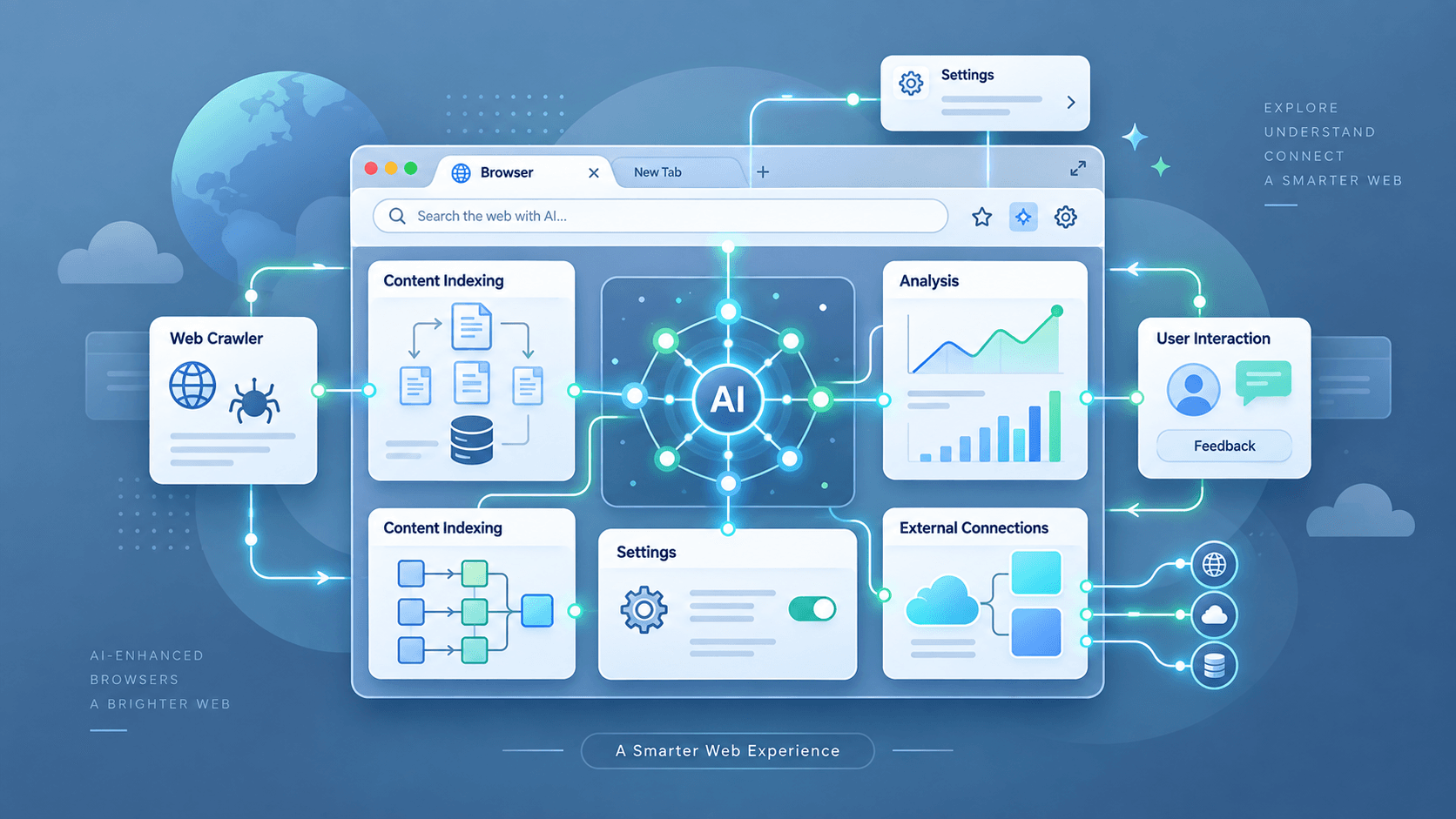
Explore how AI browsers are reshaping web discovery, content synthesis, and website design, and learn strategic adaptations for digital business growth.
The way users interact with the internet is undergoing a structural shift. For decades, web discovery relied on a traditional model: a user entered a query into a search engine, received a page of links, and manually navigated to external websites to retrieve information or complete a task. The rapid development and integration of AI browsers are fundamentally altering this pathway. By embedding large language models and autonomous agent capabilities directly into the browsing interface, these tools shift the browser from a passive document viewer into an active, conversational intermediary that reads, synthesises, and executes actions on behalf of the user.
Understanding AI Browsers and Conversational Web Discovery
To understand the strategic shift facing modern digital teams, it is essential to define what distinguishes AI browsers from conventional web browsers. Traditional browsers function as rendering engines for HTML, CSS, and JavaScript, relying on user input to navigate between discrete URL addresses. In contrast, AI-driven browsing environments incorporate natural language processing, real-time contextual analysis, and local or cloud-based model inference directly into the client layer.
This technical architectural change enables conversational discovery. Rather than executing keyword matching across indexed web pages, an AI browser processes complex, multi-step queries, retrieves unstructured data from multiple sources simultaneously, and generates a coherent, consolidated answer within the user interface. Consequently, the user frequently obtains the required business intelligence, product details, or comparative analysis without ever visiting the destination web pages directly.
Core Functionalities Redefining Digital User Behavior
The transformation driven by intelligent browsers relies on several key technical capabilities that reframe how digital content is consumed and acted upon across B2B and consumer sectors.
1. On-Demand Page Summarisation and Synthesis
One of the primary features of an AI browser is the automated extraction and distillation of web page content. When a user lands on an extensive whitepaper, product documentation, or market research report, the underlying language model parses the DOM structure, isolates key semantic entities, and presents executive summaries in real time. This reduces time-to-insight for decision-makers but minimizes the user's exposure to secondary page content, brand messaging, and traditional visual layouts.
2. Autonomous Task Execution and Agentic Workflows
Beyond information retrieval, advanced browsing agents are designed to interact with web elements autonomously. By interpreting input fields, buttons, and API structures, these tools can fill out complex forms, schedule meetings, aggregate pricing across fragmented platforms, and execute multi-stage transactions. The web browser is evolving from an interface for human navigation into an API-like environment interpreted by virtual software agents.
3. Semantic Search and In-Context Querying
Instead of relying on rigid boolean operators or specific keyword density, intelligent browsers evaluate context, user history, and intent. A user researching enterprise software can highlight a technical term on a vendor's pricing page and instantly receive an contextualized comparative breakdown sourced across the entire web, without opening additional tabs or initiating a new search session.
Implications for Web Discovery, Visibility, and Content Architecture
The rise of conversational interfaces introduces significant strategic challenges for digital marketing, brand building, and corporate web development. As machine agents become the primary readers of web content, traditional acquisition funnels must adapt to ensure long-term visibility.
Historically, digital strategies focused heavily on driving direct organic traffic through search engine results pages. However, as AI tools answer user queries directly within the browser interface, direct session metrics may experience structural decline across transactional and informational queries. The primary point of engagement moves upstream to the synthesis layer.
To remain discoverable in an ecosystem dominated by intelligent agents, organizations must re-evaluate how their web platforms structure data. Maintaining clear, semantically structured content and scalable digital architecture becomes paramount for machine readability. Technical alignment with modern search engine standards and direct information architecture is essential; working with specialized SEO services can help businesses optimize their underlying code and semantic hierarchy for both traditional crawlers and autonomous web agents.
Rethinking Website Design and UX for Machine Readers
As virtual assistants and intelligent browser extensions become primary filters for human interaction, website design paradigms must expand beyond visual aesthetics to encompass algorithmic clarity. The technical design requirements for machine-optimised digital properties include:
Structured Data and Schema Markup: Comprehensive implementation of JSON-LD schemas ensures that autonomous agents accurately identify entities, services, pricing, and organizational hierarchies without visual ambiguity.
API-First and Headless Architectures: Delivering structured content through clean endpoints alongside traditional web pages facilitates direct data access for enterprise AI agents and browser automation frameworks.
Fast, Accessible DOM Rendering: Browsers using AI agents rely on parsing readable markup efficiently. Heavy client-side rendering or obfuscated script tags can prevent automated agents from indexing core value propositions correctly.
Factual, Unambiguous Content Structures: Content designed for agentic synthesis must prioritize verified claims, transparent specifications, and logically formatted data tables over decorative prose or generic marketing copy.
Strategic Adaptation: How Businesses Should Respond
Organizations targeting international growth or competing in the UAE digital market cannot afford to treat conversational browsing as a temporary trend. Strategic adaptation requires a cross-functional approach involving marketing, engineering, and executive leadership.
First, digital teams must shift key performance indicators (KPIs) from pure pageviews and bounce rates toward brand mentions, factual accuracy within model outputs, and referral traffic originating from generative sources. Second, digital assets must be designed with modular architecture, ensuring that product information, service capabilities, and corporate insights are easily digested by synthesis models.
Finally, maintaining brand authority requires high-density, original insights. While generic informational content can easily be summarized away by an AI browser, proprietary research, technical benchmarks, unique case studies, and distinct brand voices remain irreplaceable sources that synthetic models must reference directly to maintain factual accuracy.
Conclusion: Navigating the Synthetic Web Interface
AI browsers mark a pivotal shift in the architecture of web discovery. By blending conversational inquiry, automated summarisation, and agent-driven execution into the browsing layer, they redefine how businesses communicate value to target audiences. Navigating this evolution requires balancing intuitive human-centric user experiences with rigorous, machine-readable data structures. Organizations that adapt their technical foundations, content architectures, and optimization strategies today will establish a durable competitive advantage in an increasingly automated web environment.
Frequently Asked Questions
What is an AI browser?
An AI browser is a web browser that integrates large language models, natural language processing, and automation agents directly into the user interface. It can summarize web pages, answer complex questions, synthesize content across multiple tabs, and execute multi-step online tasks on behalf of the user.
How do AI browsers impact digital visibility and search engine optimization?
Intelligent browsers shift web discovery from manual link-clicking to direct answer synthesis. To maintain visibility, businesses must focus on technical schema implementation, factual content clarity, and entity-based optimization so that autonomous agents can accurately parse and reference their digital assets.
Will AI browsers completely replace traditional web design?
No, visual web design remains critical for brand identity, transactional trust, and human engagement. However, web design must now serve a dual purpose: providing an intuitive visual interface for human users while maintaining clear, semantically structured underlying code for machine agents.
How can business owners prepare their digital infrastructure for conversational browsing?
Business owners should invest in robust technical foundations, including JSON-LD schema markup, high-performance web architecture, API-accessible data structures, and original, high-value content that provides definitive industry authority that synthetic systems rely on.