Ecommerce Architecture for Growth: What UAE Businesses Should Plan Before Scaling
 September 15, 2026
 Reading time: 7 min read
 Category: E-commerce
 21
21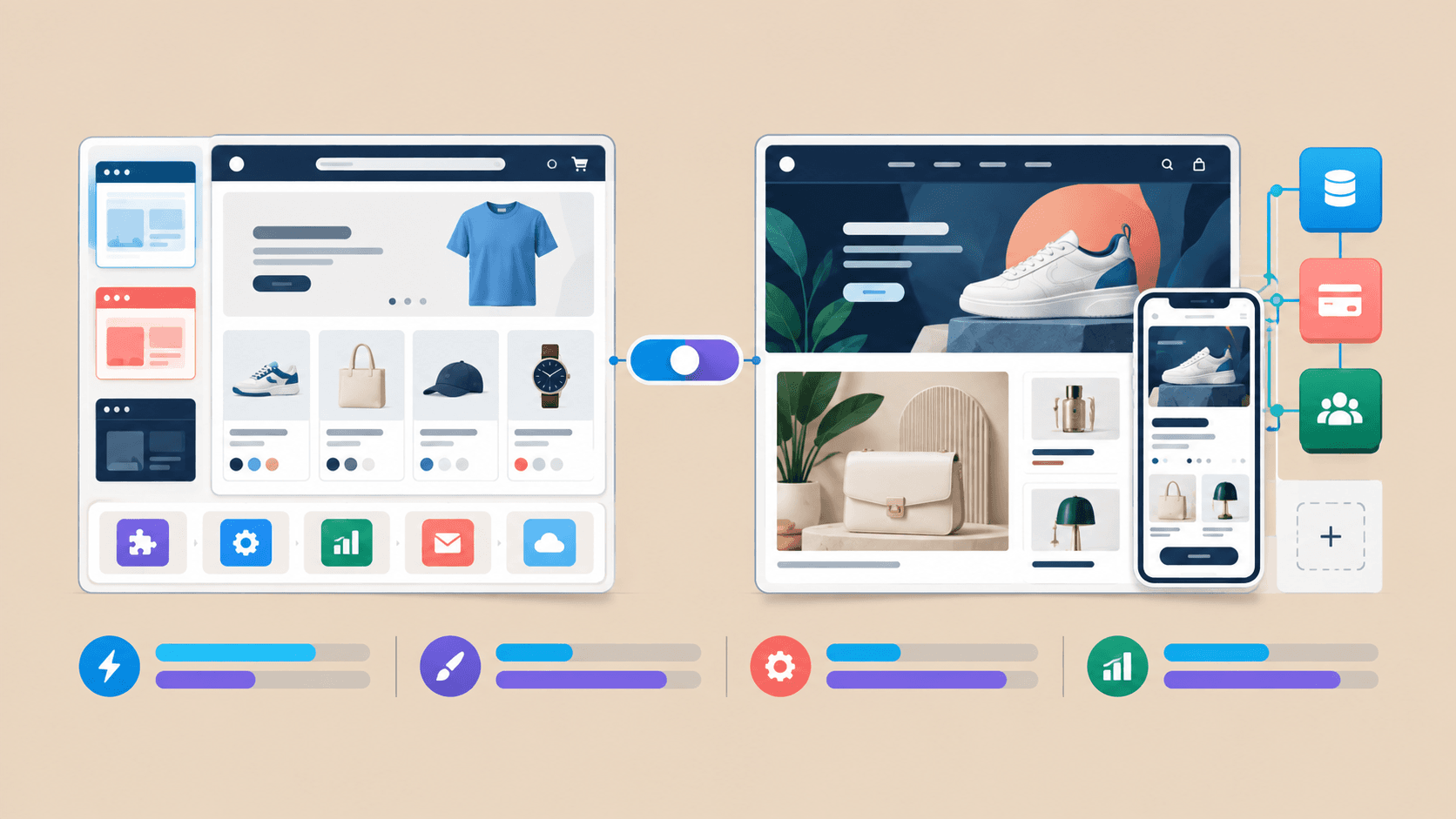
Discover how to design a scalable ecommerce architecture for UAE businesses. Learn key strategy insights for inventory, search, payments, and integrations.
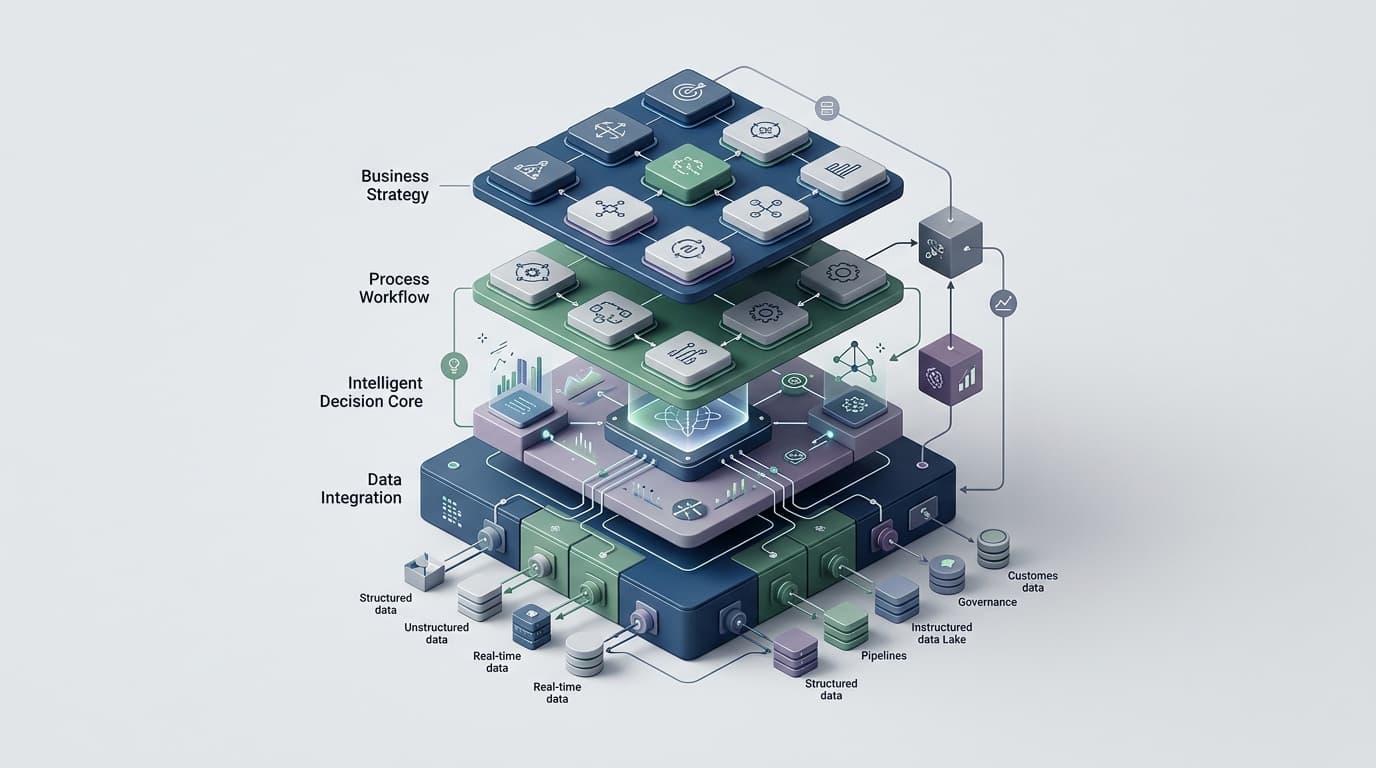
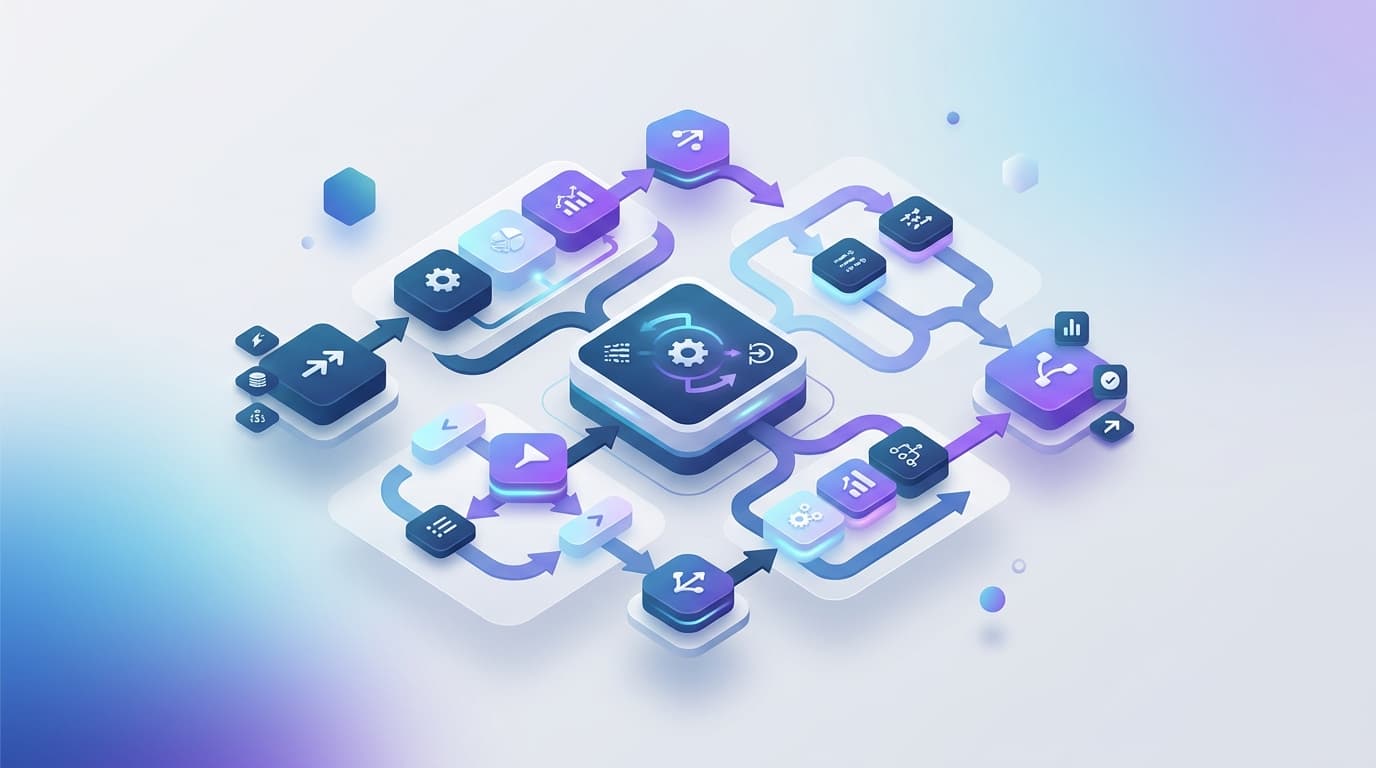
Scaling an online store in competitive markets like the UAE requires far more than increasing digital marketing budgets or refreshing front-end visuals. As order volumes spike, catalog complexity deepens, and regional customer expectations for instant fulfillment rise, underlying system bottlenecks quickly surface. A robust, future-proof ecommerce architecture serves as the structural foundation that allows growing brands to process high-concurrency traffic, manage multi-location inventories, and deliver frictionless checkout experiences without performance degradation or costly platform re-engineering.
Understanding Modern Ecommerce Architecture Frameworks
Selecting the right technical framework shapes how effectively an enterprise can adapt to market shifts, integrate third-party services, and maintain platform stability during peak traffic events. Legacy monolithic platforms—where front-end presentation and back-end business logic are tightly coupled—frequently create operational friction as operations expand.
For scaling businesses, modern architecture choices generally fall into three primary patterns:
Monolithic Systems: Unified software packages where database, application logic, and storefront UI reside together. While simpler to launch initially, they often suffer from slow deployment cycles, complex codebase dependencies, and rigid scaling limitations.
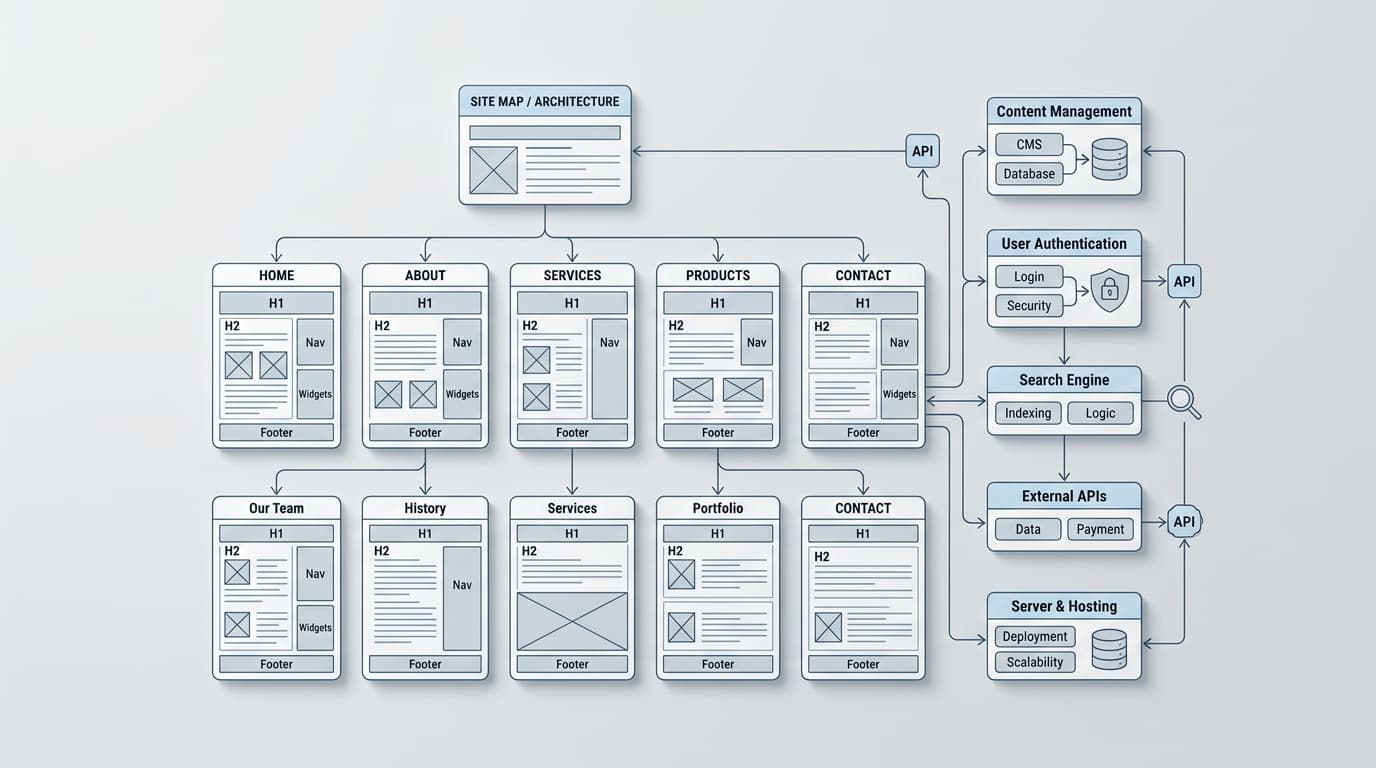
Modular & Decoupled Architecture: Architectures that separate specific business domains—such as inventory management, checkout, and content management—into distinct modules. Front-end templates consume data from back-end logic via traditional APIs, improving maintainability.
Composably Headless & API-First Architecture: Complete decoupling of the presentation layer from core commerce functions. Front-end micro-frontends interact via REST or GraphQL APIs with best-of-breed microservices for payments, search, inventory, and cart management.
Adopting headless or composable patterns allows engineering teams to deploy front-end user experience improvements independently without touching critical back-end transaction engines. However, decoupled systems introduce higher operational complexity, requiring mature DevOps capabilities and robust API monitoring tools.
Catalog Organization and Dynamic Inventory Synchronization
As a business scales from hundreds of stock-keeping units (SKUs) to tens of thousands, database query optimization becomes critical. Complex product catalogs containing deep variant matrices—such as sizing, color, regional localization, and custom attributes—can severely slow down dynamic page rendering if database schemas are poorly structured.
High-volume merchants must plan for real-time inventory management across multiple physical distribution centers, retail stores, and third-party logistics (3PL) partners. Maintaining accurate stock levels prevents overselling during high-demand flash sales and preserves consumer trust.
Key Structural Strategies for Scalable Catalogs
Normalized vs. Document Storage: Separating static catalog metadata (descriptions, specifications, media) from dynamic transaction data (stock levels, dynamic pricing rules) using specialized document stores or caching layers.
Distributed Inventory Tracking: Implementing dedicated Order Management System (OMS) middleware that aggregates inventory feeds from multiple warehouses and exposes unified stock availability to the core ecommerce platform.
Event-Driven Inventory Updates: Utilizing asynchronous event queues (such as Kafka or RabbitMQ) to update stock across all selling channels immediately upon order placement, preventing dynamic database locks.
Optimizing High-Performance Search and Caching Layers
Fast dynamic page loads directly correlate with conversion performance. Relying solely on direct database queries to fetch product listings, category pages, and search results inevitably leads to server crashes when concurrent site traffic surges. A scalable ecommerce architecture incorporates multi-tier caching and specialized search engines to offload core database traffic.
Standard relational databases are not designed to process complex, multi-faceted filtering queries across extensive catalogs in milliseconds. Deploying dedicated search microservices allows real-time indexing, multi-language support (such as side-by-side English and Arabic search capability), dynamic autocomplete, and personalized merchandising rules.
Essential Components for High-Speed Infrastructure
Edge Caching & Content Delivery Networks (CDNs): Caching static assets, media files, and fully rendered HTML pages on edge servers globally and regionally to minimize latency.
In-Memory Data Stores: Utilizing technologies like Redis or Memcached to store user active shopping sessions, shopping carts, and dynamic pricing calculations for sub-millisecond retrieval.
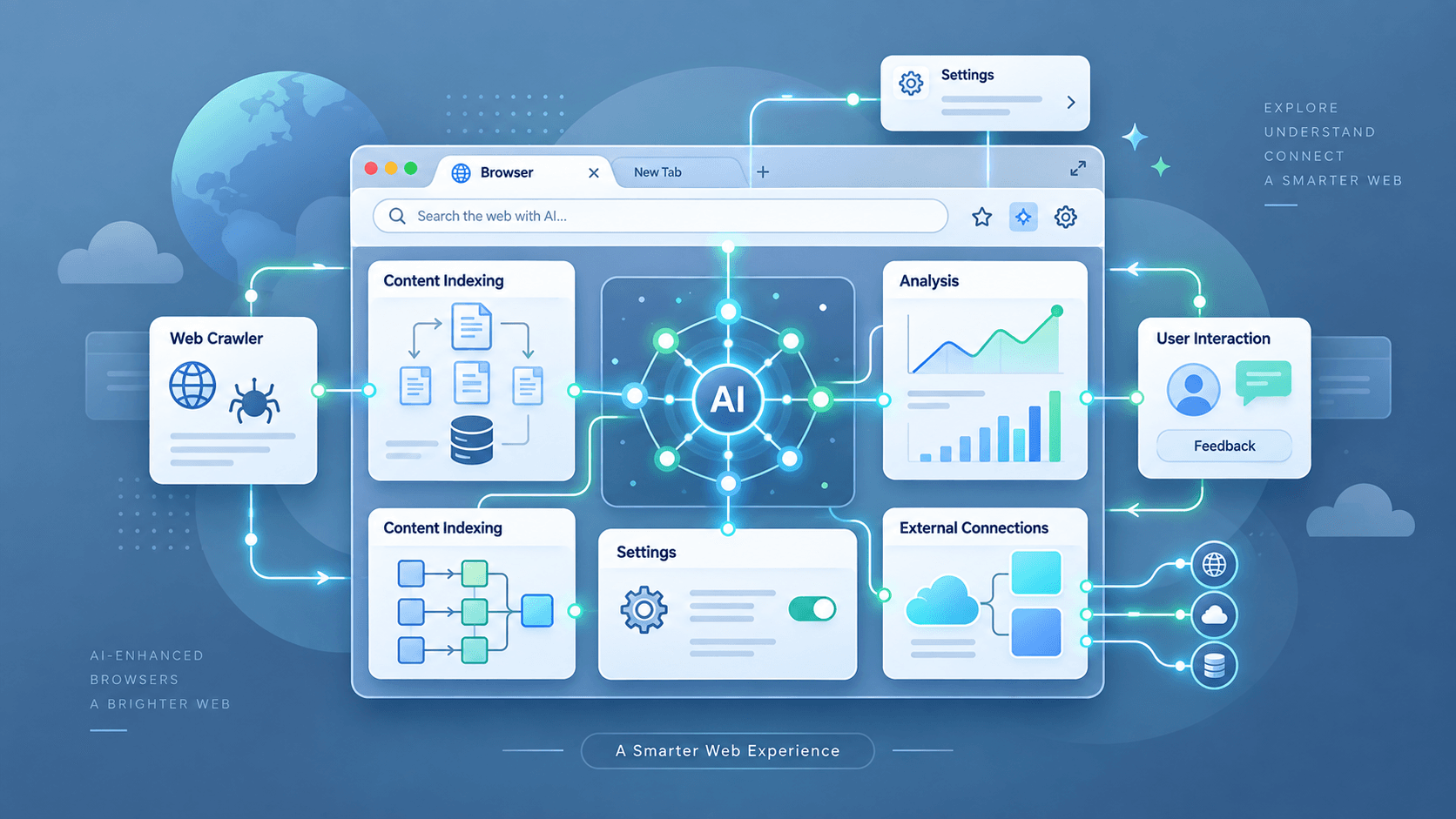
Dedicated Enterprise Search Engines: Leveraging specialized search clusters (such as Elasticsearch, OpenSearch, or cloud search engines) to offload catalog filtering and full-text search from primary transaction databases.
Ensuring Payment Gateway Reliability and Localized Checkout Flow
The checkout interface represents the final, crucial step of the digital conversion funnel. In regional hubs like the UAE and across international markets, payment infrastructure must accommodate diverse local customer preferences—including local debit networks, international credit cards, digital wallets, buy-now-pay-later (BNPL) platforms, and cash-on-delivery management workflows.
Relying on a single payment service provider (PSP) introduces a single point of failure. Modern enterprise architectures implement payment orchestrations, allowing dynamic routing of payment requests through multiple acquirers based on transaction success rates, card issuing regions, or processing fees.
Architectural Principles for Reliable Transactions
Payment Gateway Abstraction Layers: Decoupling the checkout front-end from specific payment APIs, enabling the rapid addition or switching of payment providers without rewriting core store functionality.
Idempotent API Transactions: Designing APIs that prevent duplicate processing of charges during network timeouts or user retry actions, safeguarding both merchant and customer interests.
Asynchronous Payment Status Handling: Using webhooks and event listeners to update order states asynchronously, ensuring orders are recorded even if the customer closes their browser before returning to the confirmation page.
Third-Party System Integration and Enterprise ERP Connections
An e-commerce store does not operate in isolation. As business operations expand, the store must seamlessly interchange data with Enterprise Resource Planning (ERP) systems, Customer Relationship Management (CRM) tools, Warehouse Management Systems (WMS), and marketing automation platforms.
Direct point-to-point hardcoded integrations between platforms create fragile web dependencies. If an ERP updates its schema or experiences downtime, it can trigger cascading failures across the entire online platform. Implementing an Enterprise Service Bus (ESB) or an API Gateway layer isolates core systems, normalizes data formats, and enforces strict rate-limiting policies.
Integration Method | Ideal Use Case | Primary Advantage | Architectural Consideration |
|---|---|---|---|
Point-to-Point APIs | Early-stage storefronts with few external tools | Fast initial implementation | Becomes fragile and unmaintainable at scale |
Middleware / iPaaS | Mid-market & enterprise multi-system stacks | Centralized data mapping and error logging | Requires ongoing governance and payload management |
Event-Driven Queueing | High-volume enterprise fulfillment & updates | Asynchronous processing prevents system lockups | Requires specialized engineering and monitoring |
Designing for Infrastructure Scalability, Security, and Availability
Predicting online traffic spikes caused by seasonal promotional events or marketing campaigns is inherently difficult. Rigid, fixed-server hosting environments lead to two costly outcomes: over-provisioning infrastructure that sits idle during normal operations, or under-provisioning servers that collapse under heavy promotional loads.
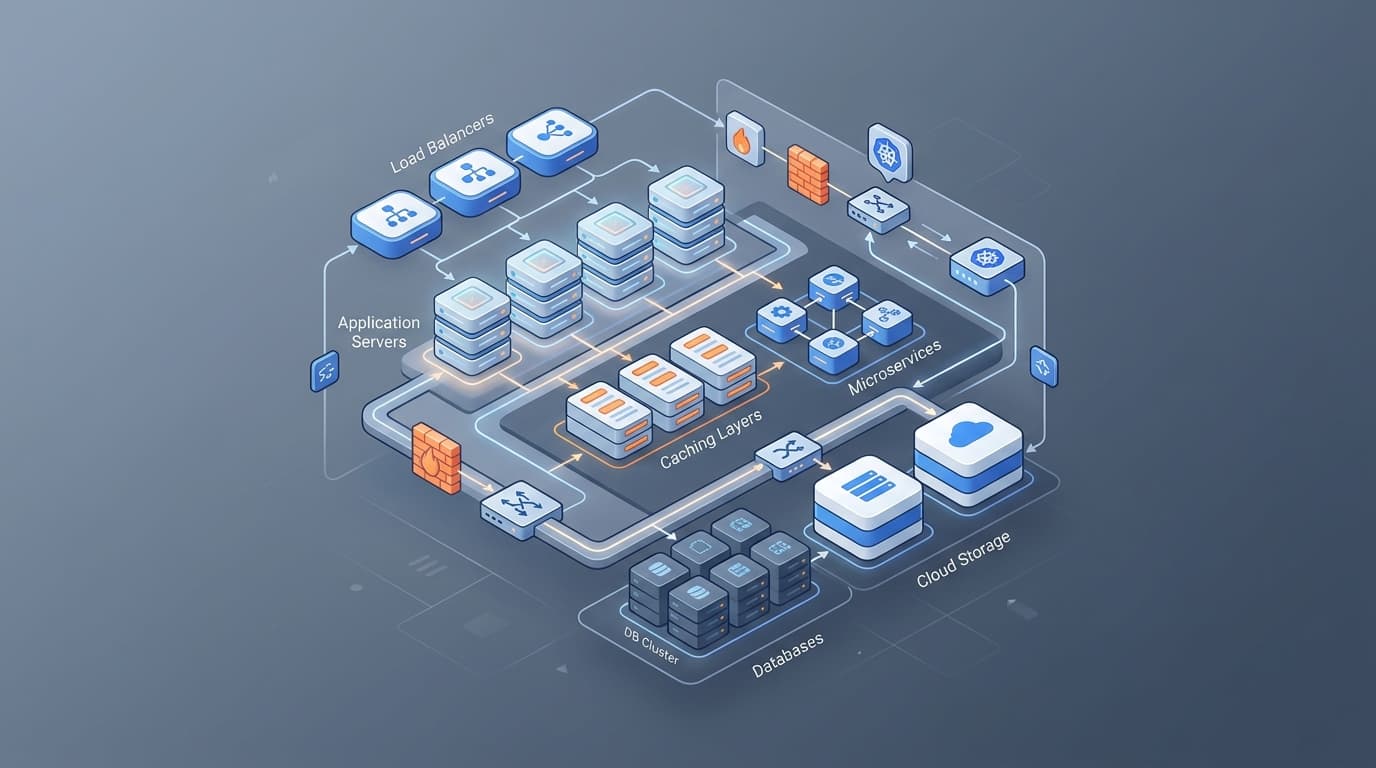
Cloud-native infrastructure leveraging auto-scaling compute clusters, containerization, and serverless compute capabilities enables platforms to dynamically adjust resources based on incoming network demand. Paired with robust security protocols, cloud architecture protects customer sensitive data while maintaining uninterrupted availability.
Core Cloud Infrastructure Pillars
Container Orchestration: Deploying store components inside lightweight containers managed by orchestration tools like Kubernetes to ensure rapid, automated scaling across application nodes.
Automated Database Read Replicas: Separating database read operations (browsing products, reading reviews) from database write operations (placing orders, updating account details) across dedicated read replicas to maintain speed.
Zero-Trust Security & Web Application Firewalls (WAF): Securing API endpoints, filtering malicious traffic, protecting against Distributed Denial-of-Service (DDoS) attacks, and maintaining strict compliance with global data protection standards.
Operational Best Practices for Long-Term Architectural Health
Building a scalable platform is an ongoing operational commitment rather than a one-time development project. Maintaining platform health as software updates, catalog expansions, and system integrations accumulate requires proactive technical governance.
Engineering and digital marketing teams must establish continuous integration and continuous deployment (CI/CD) pipelines, enabling rapid deployment of features and patch fixes without downtime. Comprehensive observability tools—combining Application Performance Monitoring (APM), real-time log aggregation, and synthetic transaction monitoring—ensure technical teams can identify and resolve platform issues before they impact end consumers.
Frequently Asked Questions
When should a growing business transition from a monolithic platform to a headless architecture?
A business should evaluate transitioning to headless or composable architecture when custom front-end user experience requirements become difficult to build on traditional monolithic themes, when expanding across multiple digital touchpoints (web, mobile apps, POS systems), or when legacy system performance bottlenecks hinder conversion rates during peak traffic times.
How does proper caching improve ecommerce database stability?
Caching stores frequently requested data—such as product descriptions, rendered page components, and customer session details—in fast, temporary memory layers like Redis or CDN edge nodes. This prevents repeated, expensive calls to the primary relational database, allowing it to preserve processing capacity for critical write tasks like order processing.
What role does an Order Management System (OMS) play in architectural scalability?
An OMS acts as a centralized bridge between the online storefront, enterprise ERP systems, physical store networks, and warehouse logistics providers. By decoupling order fulfillment logic from the front-end commerce platform, the OMS ensures dynamic inventory synchronization across all sales channels without overloading the front-end platform database.
How can ecommerce platforms protect performance during flash sale events?
Protecting platform stability during high-concurrency flash sales requires cloud auto-scaling infrastructure, separating database read and write channels, utilizing asynchronous queue processing for order validation, and offloading search queries to dedicated search indices rather than relying on direct application database queries.