Custom Web Application vs Marketing Website: Different Problems, Different Architecture
 September 23, 2026
 Reading time: 7 min read
 Category: Web Design & Development
 9
9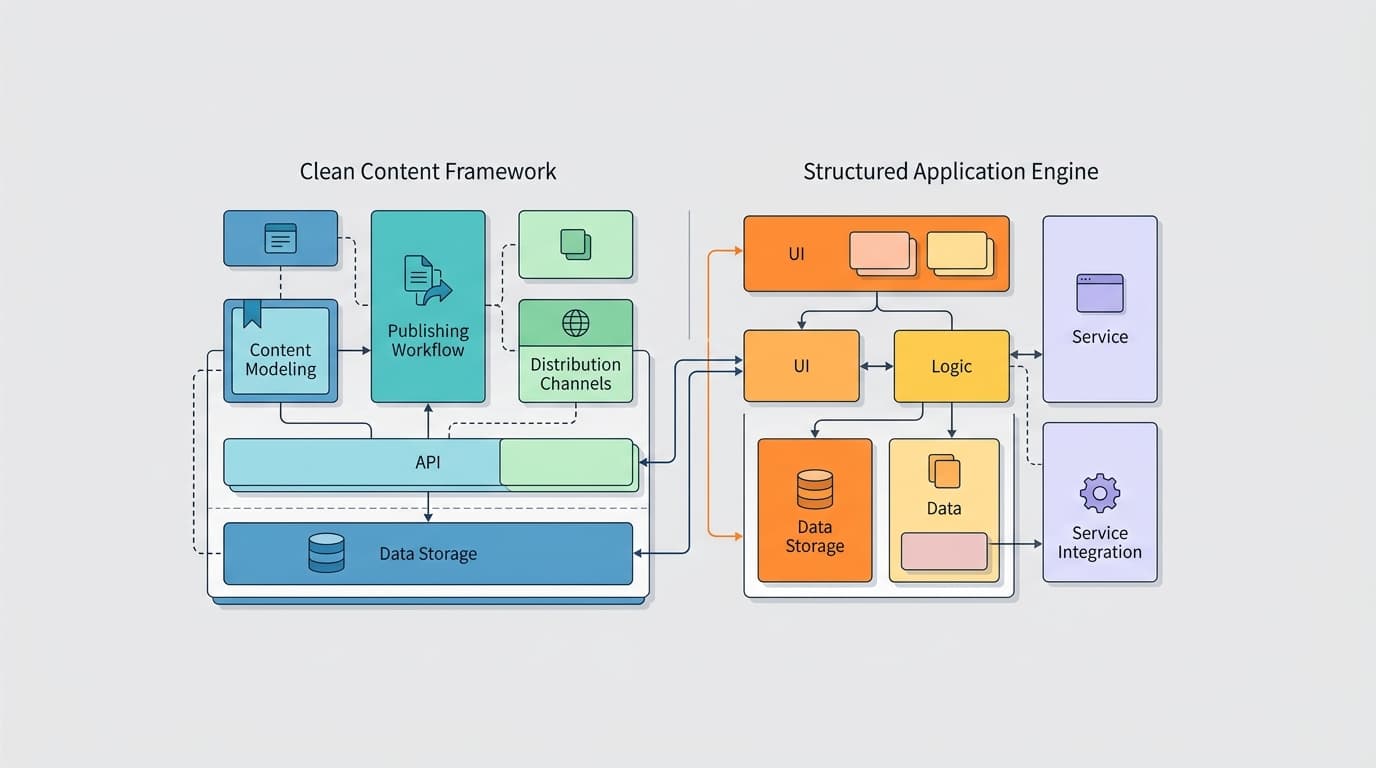
Compare product logic, data models, authentication, and hosting differences between a custom web application and a marketing website to scope your web project.
When scoping a modern web project, organizational leaders often treat all web builds under a single technical umbrella. However, deploying a marketing website and engineering a custom web application represent two fundamentally different software engineering disciplines. Choosing the wrong technical architecture for your core business objectives leads to unnecessary overhead, bloated development cycles, or catastrophic scaling limitations. Understanding these structural differences is essential for accurately scoping resources, establishing realistic delivery timelines, and building a foundation that directly supports operational performance.
Defining the Architectural Paradigm Shift
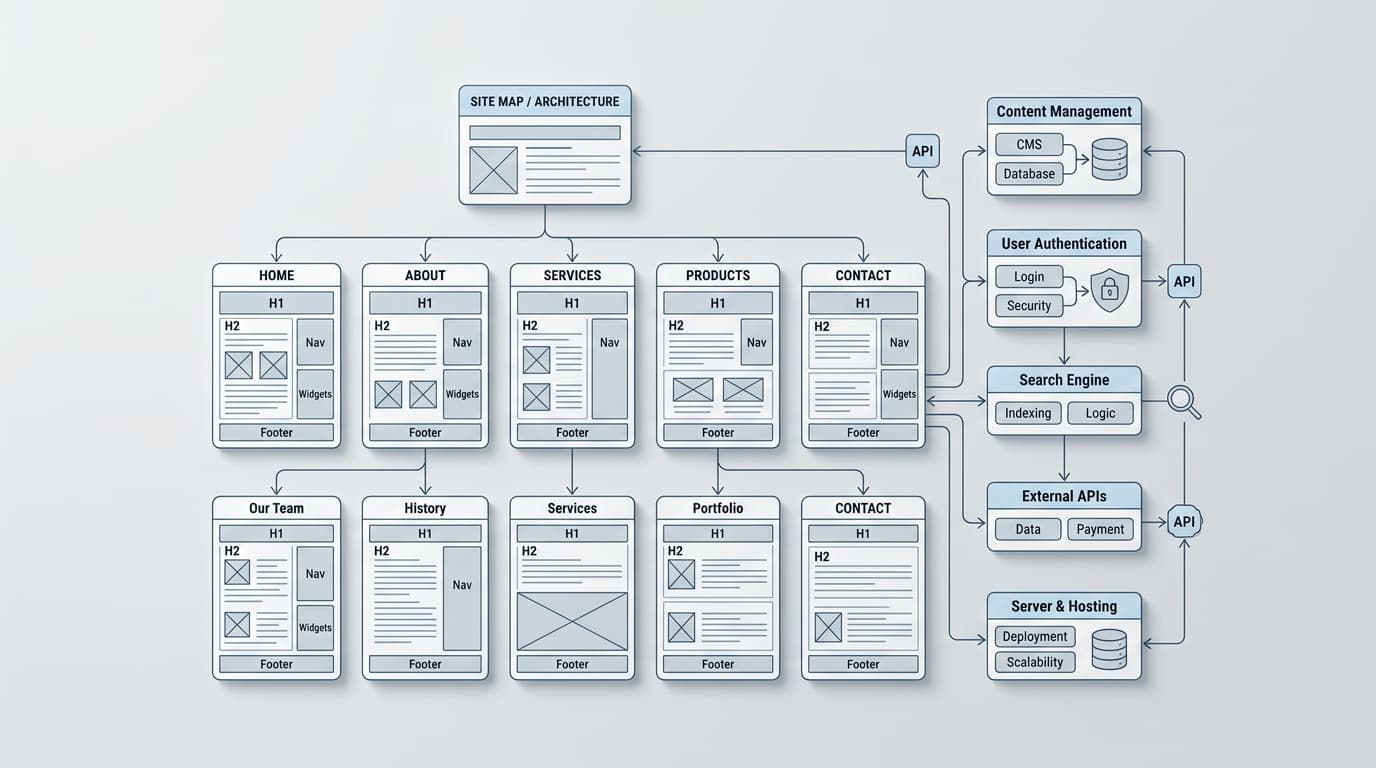
At its core, a traditional marketing website exists primarily to deliver static or dynamic content to a broad audience, optimized for discovery, engagement, and conversion. In contrast, a custom web application is built around business logic, transactional data state, and user interactivity. While a marketing site acts as a digital storefront designed to inform, a custom application serves as an operational engine designed to execute tasks, process complex inputs, and maintain persistent state across session environments.
This fundamental difference dictates every technological decision—from database normalization strategies to hosting infrastructure and security posture. Organizations that attempt to build deep SaaS functionality into traditional content management systems (CMS) quickly hit architectural bottlenecks. Conversely, teams that build pure web applications without proper content delivery pipelines struggle with visibility, content velocity, and search engine positioning.
Product Logic and State Management
Product logic on a marketing site is generally unidirectional. The system reads content from a database or file store, transforms it through a template renderer, and outputs HTML to the browser. User interactivity is typically constrained to form submissions, search queries, and dynamic content filtering. State management is straightforward and largely relies on server-side caching mechanisms to serve pre-rendered pages as quickly as possible.
A custom web application relies on complex, bi-directional logic where state management forms the core of the system architecture. User actions continuously alter data state in real time. The frontend application—frequently built on reactive frameworks like React, Vue, or Angular—must maintain synchronous state with the backend database via RESTful APIs, GraphQL, or WebSockets. Handling concurrent data updates, asynchronous jobs, multi-step validation workflows, and transaction rollbacks requires dedicated engineering that extends far beyond page rendering engines.
Authentication, Authorization, and Security Models
Security expectations differ dramatically between content platforms and software platforms. On a marketing site, authentication is typically restricted to administrators, editors, and content creators accessing the CMS backend. End users remain largely anonymous. The security focus centers on preventing cross-site scripting (XSS), cross-site request forgery (CSRF), SQL injection, and managing public content access control.
In a custom web application, authentication and authorization are central to the application layer. The system must support granular, role-based access control (RBAC), fine-grained data visibility permissions, and secure session persistence. Architectures often integrate identity providers using protocols like OAuth 2.0, OpenID Connect, and JWT tokens. Security protocols must cover multi-tenant data isolation, strict API security, data encryption at rest and in transit, and comprehensive audit logging to satisfy regulatory compliance standards.
Data Modeling and Integration Requirements
Data models for marketing platforms are organized around document structures, taxonomies, categories, and media assets. Relational schemas are optimized for reading and joining content nodes efficiently. Integrations are typically oriented around external marketing automation platforms, customer relationship management (CRM) systems, and tracking scripts designed to monitor user journeys across public touchpoints.
Conversely, a custom web application requires highly specialized transactional data models. Databases—whether relational like PostgreSQL or NoSQL like MongoDB—are structured around domain entities, business rules, and strict data consistency. A single application transaction might trigger background worker threads, queue third-party API webhook calls, update microservices, and mutate multiple database tables. Integrating these systems requires robust event-driven architectures, queue managers like RabbitMQ or Redis, and precise failure handling mechanisms to maintain data integrity.
Content Workflows vs Operational Workflows
Content velocity and publication flexibility are critical performance metrics for marketing websites. Non-technical teams require flexible visual builders, structured headless CMS environments, and workflow approvals to launch campaigns rapidly without engineering dependency. If your primary objective is driving user acquisition through targeted content and dynamic user funnels, leverage professional digital marketing strategies to align your platform architecture with acquisition goals.
Operational workflows in a web application prioritize data accuracy, computational logic, and procedural automation. End users interact with workspace tools, dashboards, or transaction processing interfaces where operational speed and reliability override visual customization. Software engineers build these interfaces using component libraries and strict design systems to guarantee interface stability and operational consistency rather than aesthetic variance.
Performance, Infrastructure, and Scalability Patterns
Performance optimization strategies differ significantly based on these application goals:
Marketing Website Architecture: Relies heavily on Edge networks, Global Content Delivery Networks (CDNs), Static Site Generation (SSG), and Server-Side Rendering (SSR). The objective is to push content as close to the physical location of the user as possible, minimizing Time to First Byte (TTFB) and ensuring exceptional Core Web Vitals.
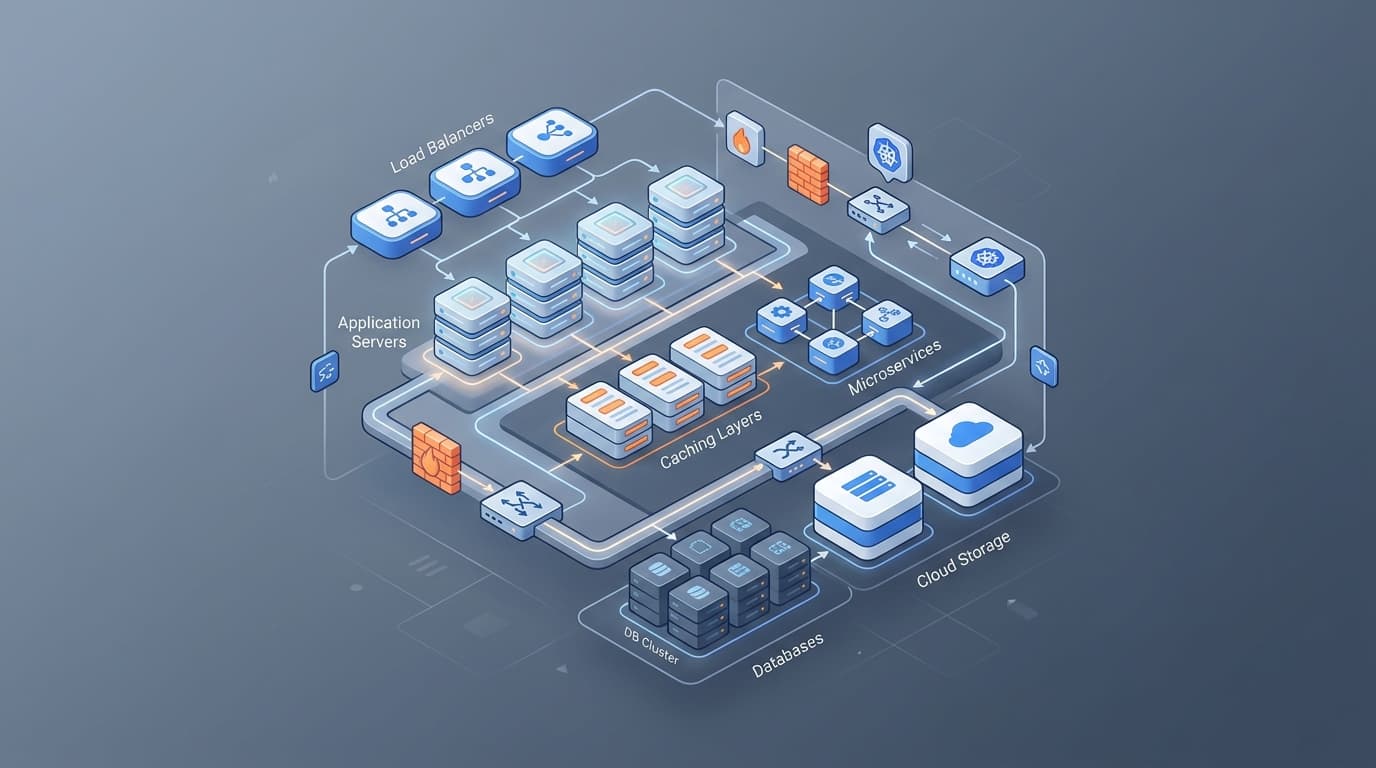
Custom Web Application Architecture: Focuses on database query optimization, horizontal pod autoscaling, microservices or modular monolith decoupling, persistent socket connections, and distributed caching layers. Scalability is evaluated by request latency under heavy concurrent user loads, database lock contention, and computational efficiency during state mutations.
Hosting environments reflect this divide. While marketing sites thrive on managed serverless platforms or specialized CMS hosting, custom applications require containerized orchestration environments using Docker and Kubernetes deployed across public or hybrid cloud infrastructures like AWS, Azure, or Google Cloud Platform.
Maintenance, CI/CD, and Long-Term Operations
Maintaining a marketing site centers on dependency updates, CMS core security patches, content governance, and SEO health audits. Continuous Integration and Continuous Deployment (CI/CD) pipelines are straightforward, often triggering static builds whenever content editors publish changes or developers deploy markup updates.
Maintaining a custom web application demands comprehensive DevOps engineering. Deployment pipelines require automated unit testing, integration testing, end-to-end user regression scripts, and automated database migration strategies. Code changes must undergo strict continuous integration reviews to prevent operational downtime. Monitoring shifts from basic uptime checks to detailed Application Performance Monitoring (APM), tracing distributed service calls, error tracking, and database performance profiling.
Making the Strategic Architectural Choice
Selecting the correct approach requires evaluating core business requirements rather than technical preference. If your primary objective is brand building, inbound lead generation, and content delivery, a modern, decoupled marketing website provides optimal agility and lower total cost of ownership.
If your project demands processing proprietary data, managing user accounts, automating internal operations, or delivering a software platform as a service, investing in a custom web application architecture is imperative. In many enterprise scenarios, the optimal strategy combines both: running a lightweight, headless content architecture for public-facing acquisition alongside a secure, dedicated web application platform built specifically for core business operations.
Frequently Asked Questions
Can a marketing website evolve into a custom web application over time?
While minor web application functionality can be integrated into a CMS via custom plugins or external APIs, forcing complex transactional logic into a marketing site framework usually creates technical debt. Once business logic and user state requirements grow, decoupling the web application onto a dedicated platform while maintaining the marketing site independently is the recommended enterprise strategy.
Why shouldn't we build our marketing website inside our custom application framework?
Building marketing pages directly inside a modern app architecture like React or Angular often makes content updates dependent on software engineering deployments. Content managers lose the autonomy to edit pages, run A/B tests, or launch marketing campaigns independently, ultimately slowing down marketing velocity and consuming valuable developer hours.
Which architecture requires a higher initial financial investment?
Custom web applications require a substantially higher initial investment due to explicit data architecture design, backend systems engineering, API development, custom interface design, and comprehensive security testing. Marketing websites, even enterprise-grade builds, benefit from established design systems, pre-built CMS frameworks, and modular page builders that lower initial development costs.
How do security compliance standards differ between these platforms?
Marketing websites typically only need to comply with basic privacy standards such as GDPR and CCPA regarding user tracking and cookie consent. Custom web applications that process personal, transactional, or financial data often must comply with far stricter regulatory frameworks, including PCI-DSS, HIPAA, or SOC 2, requiring mandatory audit logging, encrypted storage, and strict identity controls.