How to Choose the Right Tech Stack for a Business Website in 2026
 September 15, 2026
 Reading time: 7 min read
 Category: Guides
 16
16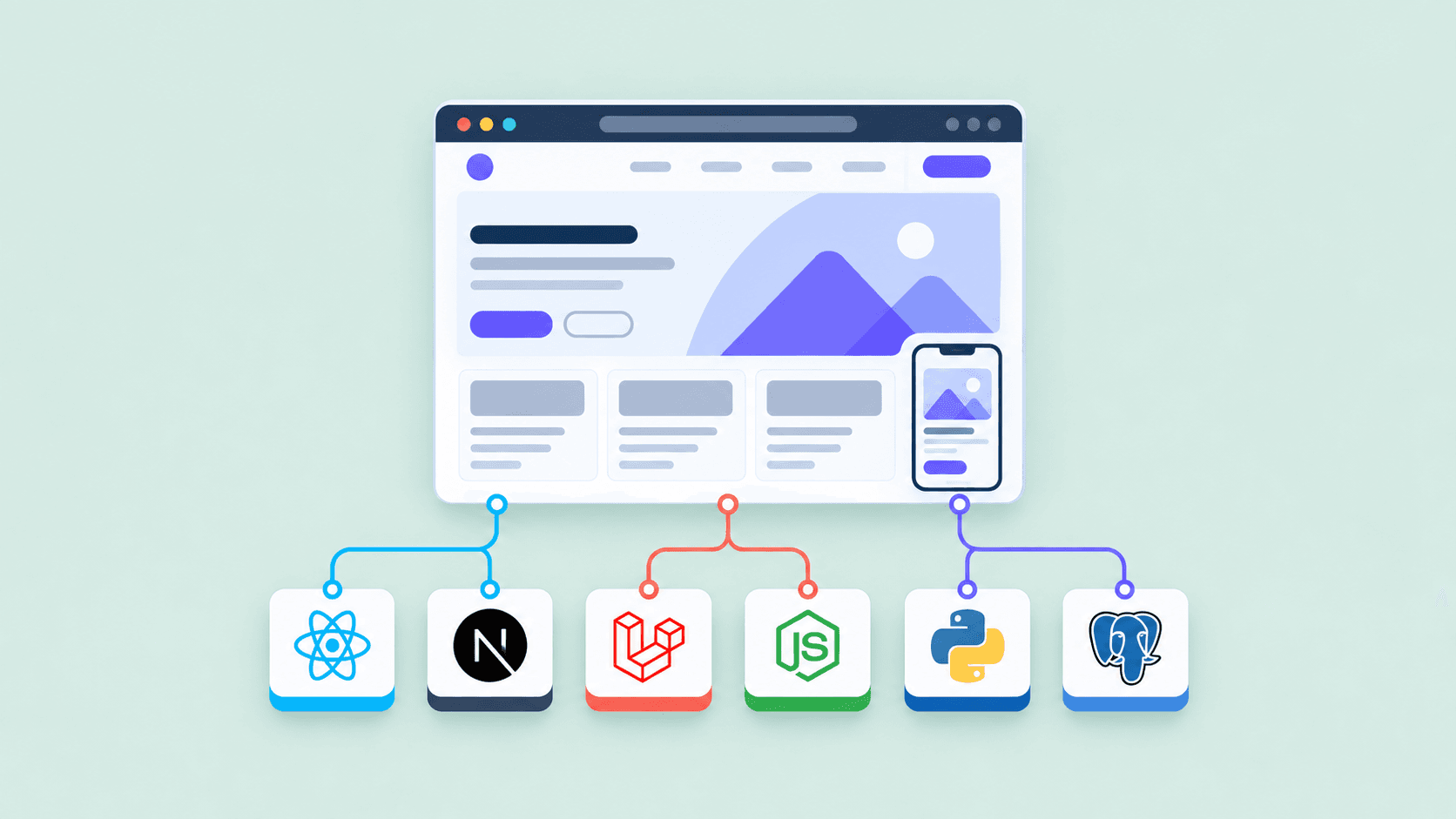
Learn how to choose the right business website tech stack in 2026. Evaluate security, scalability, performance, and headless architectures for GCC growth.
Selecting the optimal business website tech stack in 2026 is no longer just an IT implementation detail; it is a fundamental strategic decision that directly impacts operational agility, regional security compliance, user experience, and long-term operating costs. For growing small-to-medium enterprises (SMEs) and expanding mid-market organisations operating across the UAE and global markets, the technology powering your digital storefront or corporate portal determines how rapidly you can innovate, integrate artificial intelligence, and adapt to shifting market demands. Rather than chasing short-lived digital trends or accepting legacy monoliths out of habit, modern digital leaders must evaluate infrastructure through a structured, multi-dimensional decision framework.
Understanding the Anatomy of a Modern Business Website Tech Stack
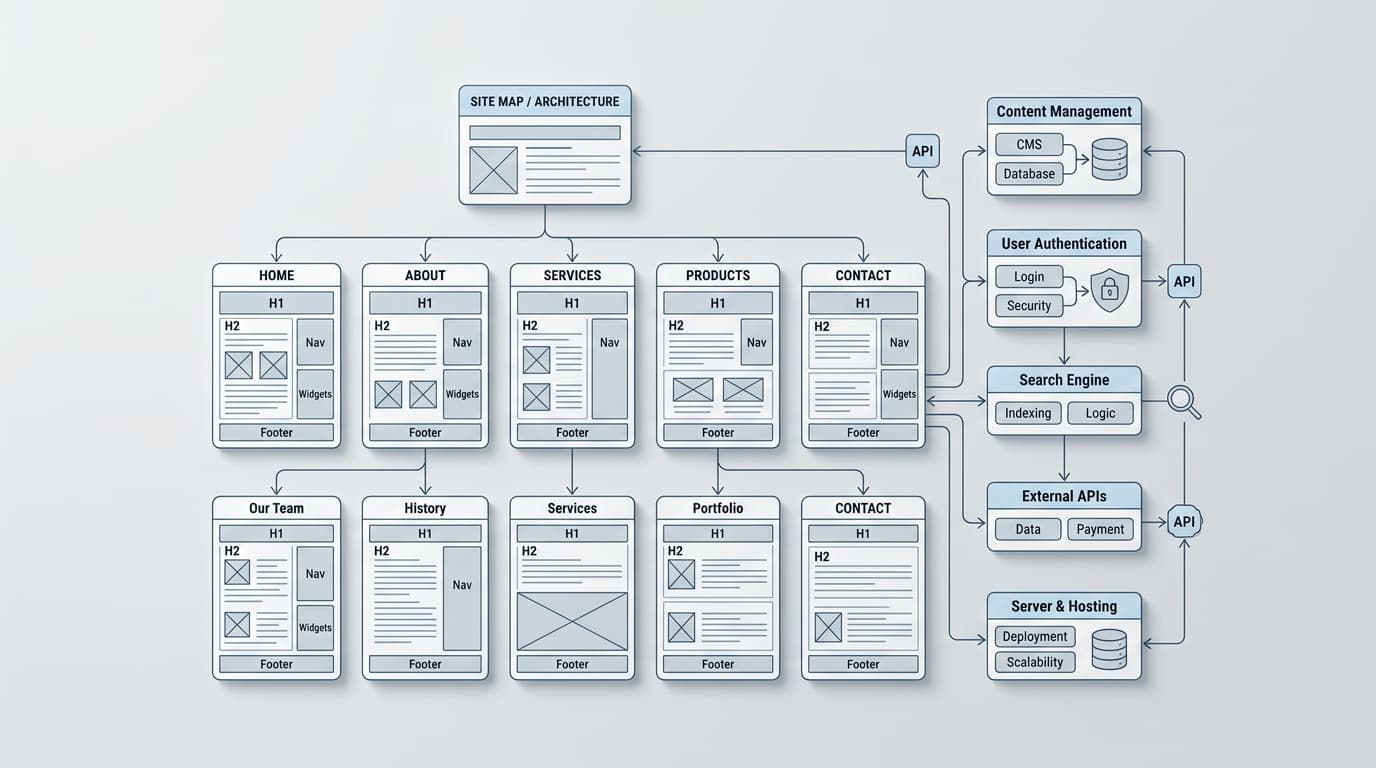
A business website tech stack comprises the layered technologies used to build, host, run, and maintain your digital web presence. Historically, organizations relied on tightly coupled, monolithic architectures where the database, backend code, and frontend presentation layers were fused into a single application package. Today, the technological landscape has evolved into highly modular, decoupled, and API-first ecosystems.
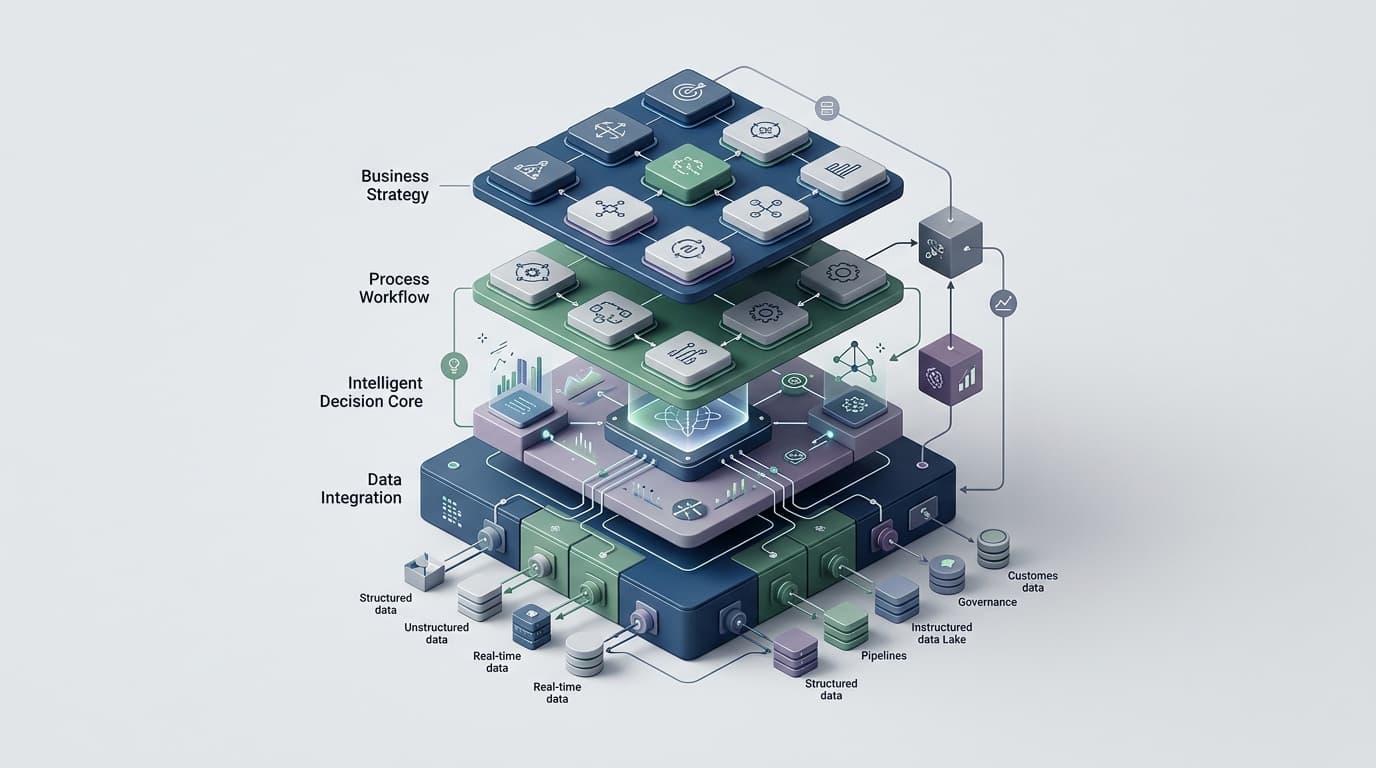
To evaluate potential solutions effectively, technical decision-makers should break down the architecture into five primary layers:
Frontend Layer: The user-facing interface built using frameworks like Next.js, Nuxt, React, or modern headless rendering engines that deliver rapid page loads and fluid user interactions.
Backend & Content Management Layer: The business logic and content engine, ranging from traditional Content Management Systems (CMS) like WordPress or Drupal to modern Headless CMS platforms (such as Strapi or Sanity) and enterprise DXP platforms.
Database Layer: Structured and unstructured data stores (e.g., PostgreSQL, MySQL, MongoDB) responsible for managing product catalogs, user profiles, transactional records, and custom business entities.
Integration & API Layer: Middleware, GraphQL endpoints, REST APIs, and automation webhooks that connect the website directly with ERP systems, CRM platforms (such as HubSpot or Salesforce), payment gateways, and AI orchestration engines.
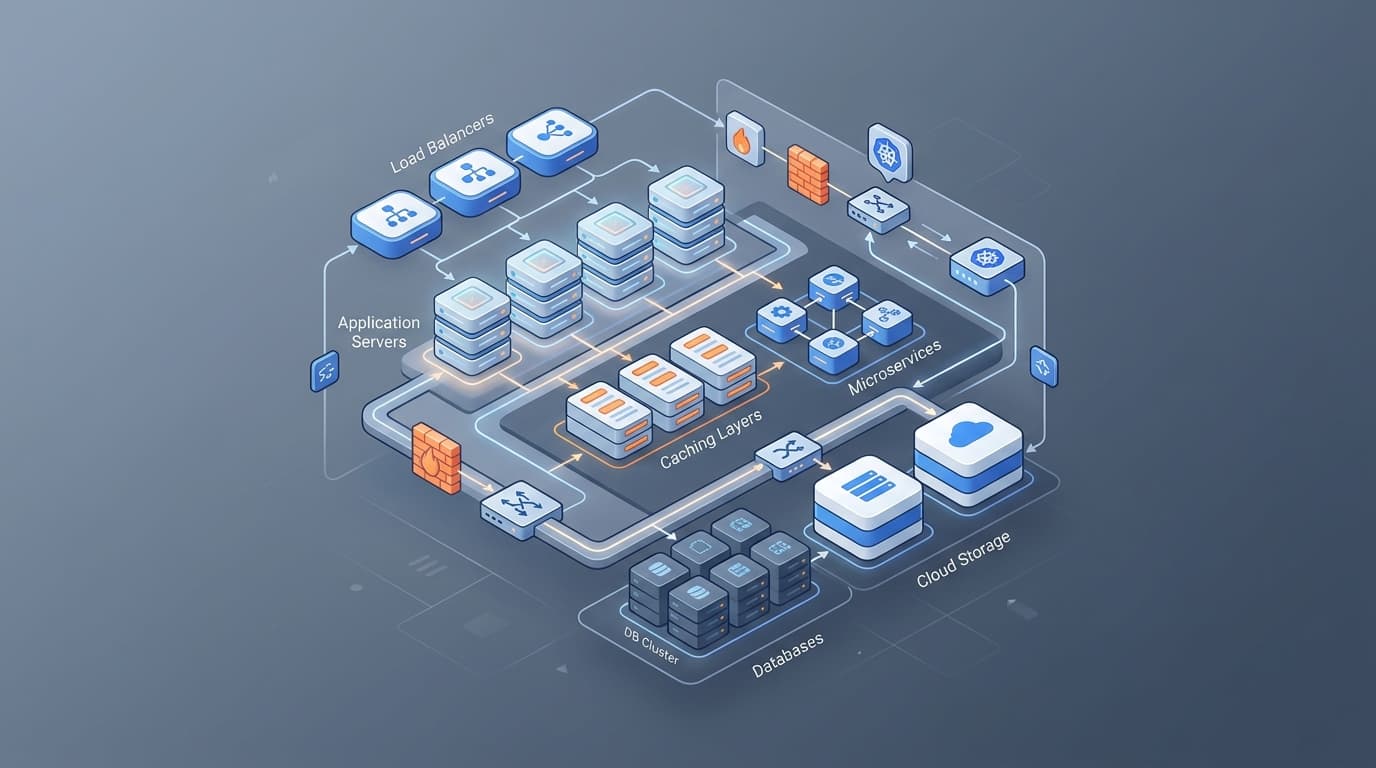
Hosting & Cloud Infrastructure: Cloud hosting environments, Serverless edge networks (such as Vercel, AWS, or Azure), Content Delivery Networks (CDNs), and regional data security mechanisms.
Key Decision Criteria for SMEs and Growing Enterprises
No single technology stack is universally superior for every organization. A enterprise-grade headless architecture that suits a high-volume omni-channel retailer may introduce unnecessary overhead for a business-to-business professional services firm. Choosing the right tech stack requires balancing several core criteria specific to your operational context.
1. Long-Term Maintainability and Code Quality
Software drift and technical debt accumulate rapidly when custom platforms rely on obscure frameworks or highly customized, undocumented code. Maintainability refers to how easily your internal team or digital partner can update, repair, and enhance the website over time without breaking existing features. Choosing established, well-documented technologies with broad developer adoption ensures your digital asset does not become a proprietary black box.
2. Scalability and Traffic Elasticity
Scalability must be evaluated across two distinct vectors: traffic volume and operational complexity. Your tech stack must accommodate seasonal traffic surges—such as major regional retail events or viral marketing campaigns—without server degradation. Simultaneously, as your business grows, your architecture must support multi-language capabilities (including seamless right-to-left RTL support for Arabic), multi-region currency routing, and complex permissions without requiring a complete rebuild.
3. Enterprise Security and Data Sovereignty
Cybersecurity considerations have elevated to the top of executive priorities. Organizations operating within the UAE and broader GCC region must comply with stringent national data protection regulations, regional storage requirements, and international standards such as GDPR. A secure business website tech stack must incorporate web application firewalls (WAF), automated security patching, robust identity and access management (IAM), and strict API authentication protocols.
4. Deep Ecosystem Integrations
A modern corporate website does not exist in isolation. It functions as the primary digital interface for your core operational systems. When evaluating backend components, prioritize platforms that offer robust, native REST or GraphQL APIs. Seamless integration with custom ERP engines, cloud inventory management, customer support desks, and marketing automation pipelines reduces manual data entry and minimizes operational friction.
5. Performance and Page Speed Optimization
User expectations for loading speed are non-negotiable. Slow page response directly damages conversions, search engine visibility, and brand perception. Architecture decisions—such as opting for Server-Side Rendering (SSR) or Static Site Generation (SSG) via modern JavaScript frameworks—directly influence Core Web Vitals, mobile rendering performance, and search ranking effectiveness across target search engines and AI answer engines.
6. Team Capability and Local Talent Availability
A sophisticated technology selection is ineffective if your internal digital team or external partner lacks the specialized expertise required to build and maintain it efficiently. Organizations operating in competitive digital hubs like Dubai and Riyadh must factor local developer talent availability, vendor ecosystem strength, and ongoing support costs into their long-term architectural roadmap.
Monolith vs. Headless vs. Hybrid: Architectures Compared
Navigating technology choices in 2026 generally comes down to selecting the foundational architectural model that best aligns with your organization's digital maturity and growth trajectory.
Traditional Monolithic CMS
Monolithic platforms combine the content database, administration dashboard, and frontend design layer into one unified software application. Standard implementations of platforms like WordPress or traditional PHP frameworks fall into this category.
Best for: Early-stage SMEs, content-heavy blogs, and businesses requiring rapid deployment with moderate technical budgets.
Trade-offs: Lower initial cost and vast plugin ecosystems, but higher risk of performance bottlenecks, plugin dependency conflicts, and scaling constraints if heavily customized.
Decoupled & Headless Architecture
Headless architecture separates the backend content management system from the frontend presentation layer using APIs. Content creators work within a specialized CMS interface, while developer teams build lightning-fast, highly customized frontends using modern frameworks like Next.js or Vue.
Best for: Fast-growing mid-market enterprises, high-volume e-commerce platforms, multi-channel brands, and applications demanding bespoke user interfaces and top-tier performance.
Trade-offs: Exceptional speed, elevated security, and complete visual freedom, but requires higher upfront development investment and specialized engineering management.
Hybrid Composable Stacks
Hybrid solutions leverage traditional CMS infrastructure for standard content pages while integrating headless, API-driven components for interactive web applications, customer portals, or specialized custom business modules.
Best for: Established companies transitioning away from legacy environments who require modern digital capabilities without discarding existing investments.
Trade-offs: Balanced cost and agility, though requiring clear architectural governance to prevent complexity creep across connected systems.
Strategic Implementation Framework for Technology Leaders
To navigate the technology selection process systematically, leadership teams should adopt a practical four-phase decision matrix:
Define Business & Technical Requirements: Document functional needs, expected monthly traffic, third-party system integrations, internal team skills, and compliance obligations before reviewing software vendor options.
Calculate Total Cost of Ownership (TCO): Look beyond initial development costs. Calculate platform licensing fees, cloud hosting infrastructure, API volume costs, ongoing maintenance, security auditing, and internal overhead across a three-to-five-year operational window.
Assess Modular Flexibility: Ensure selected components can be upgraded or swapped independently. Avoid vendor lock-in by opting for open standards, decoupled layers, and portable data structures.
Conduct a Technical Proof of Concept (PoC): Build a prototype of key website features—such as automated API synchronization or Arabic/English dynamic rendering—to validate performance and integration capabilities before committing to full-scale development.
Future-Proofing Your Business Architecture for AI and Automation
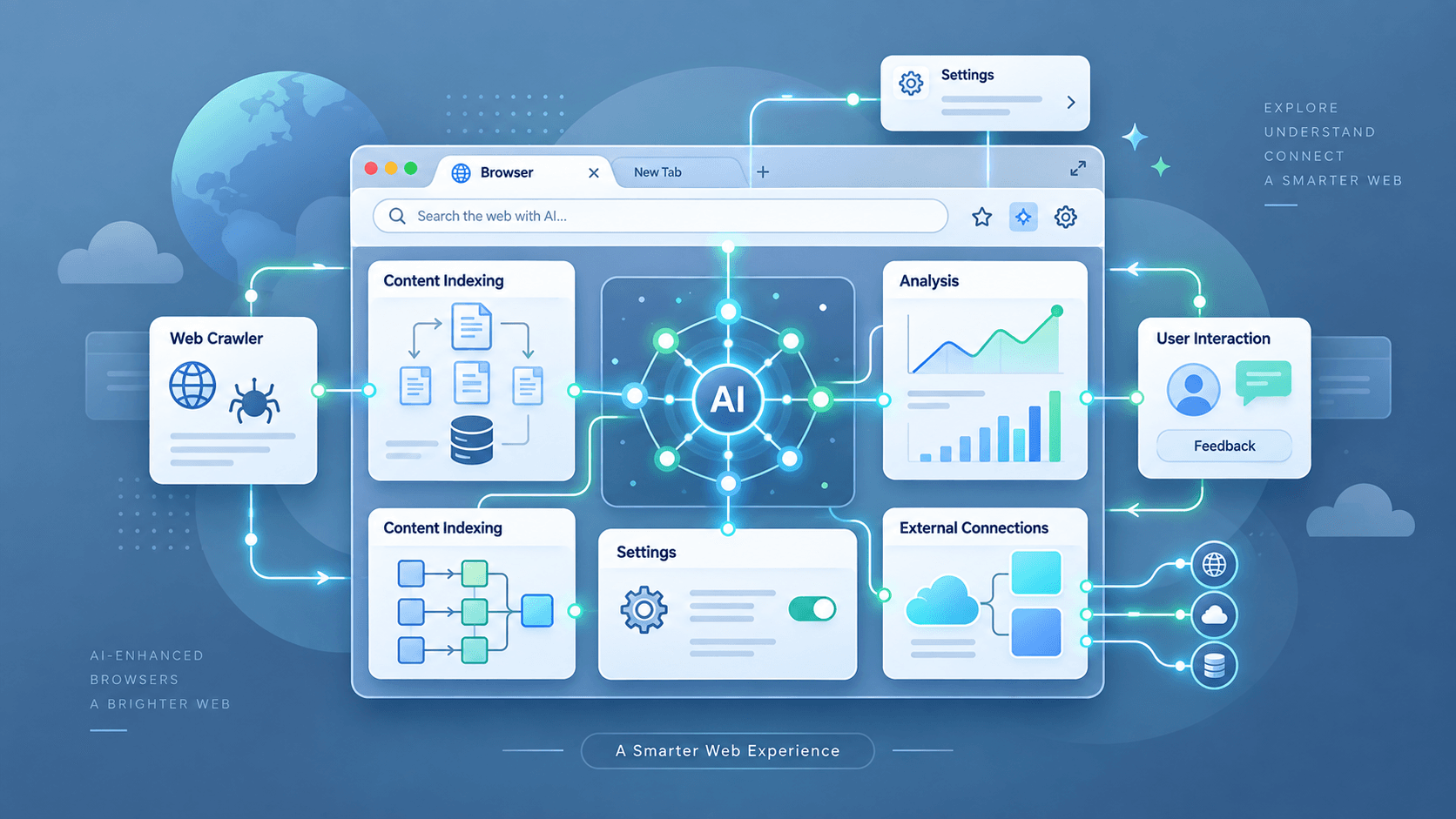
As business websites transition into intelligent interaction hubs, architectural choices must account for direct AI search engine discoverability, automated workflow integrations, and dynamic personalized experiences. Choosing an API-first backend ensures your content structures are easily indexed by generative AI agents and connected to customer-facing automated support bots.
Furthermore, deploying serverless hosting infrastructure allows server resources to auto-scale instantly based on demand spikes, reducing baseline server costs while guaranteeing uptime during high-profile marketing campaigns. By focusing on maintainability, regional security, performance, and API modularity, decision-makers can select a business website tech stack that serves as a durable engine for commercial growth.
Frequently Asked Questions
What is a business website tech stack?
A business website tech stack is the combined suite of software frameworks, programming languages, databases, CMS engines, APIs, web servers, and cloud infrastructure used to build, manage, and run a digital website or web application.
How do I choose between a traditional CMS and a headless architecture?
Choose a traditional CMS if you require a cost-effective solution, rapid deployment, and simple content management for a standard website. Opt for a headless architecture if you require maximum site speed, advanced security, bespoke user interface design, multi-platform content distribution, or deep integration with custom software tools.
Why is API-first design important for growing businesses in 2026?
An API-first design decouples individual components of your digital ecosystem, allowing content, databases, payment systems, and marketing tools to communicate effortlessly. This modular approach allows businesses to replace or upgrade specific services without rebuilding the entire website.
How does choice of hosting impact website performance and regional compliance?
Cloud hosting infrastructure determines your site's physical proximity to your target users, directly affecting latency and load speeds. Additionally, hosting within secure regional edge networks helps businesses comply with strict data protection laws, sovereign data regulations, and localized privacy mandates.