AI Agents for Business: Where They Actually Create Value
 September 15, 2026
 Reading time: 8 min read
 Category: Artificial Intelligence
 15
15
Explore practical deployment strategies for AI agents for business. Learn how autonomous systems differ from chatbots, drive enterprise ROI, and ensure safety.
Artificial intelligence in enterprise operations has shifted from passive information retrieval to dynamic execution. While early enterprise AI adoption focused heavily on conversational interfaces and rigid script-based automation, the modern operational landscape is defined by autonomous AI agents for business. These advanced software entities do not merely answer queries or follow hardcoded paths; they reason through multi-step workflows, interact with cloud infrastructure, execute complex decision chains, and adapt when unexpected edge cases arise. For business leaders, digital directors, and technology decision-makers across the UAE and global markets, moving past the marketing hyperbole surrounding autonomous systems requires a clear understanding of what AI agents genuinely offer, where they create measurable economic value, and how to safely integrate them into existing technology stacks.
Defining AI Agents: Beyond Chatbots and Deterministic Automation
To evaluate where AI agents for business deliver actual return on investment, organizations must first establish a precise technical baseline that distinguishes them from existing legacy technologies. Enterprise IT has long relied on two distinct categories of tools: conversational chatbots and deterministic process automation software.
Traditional chatbots rely primarily on intent matching and pre-scripted conversational trees or large language model wrappers designed for passive question-answering. They receive a query, retrieve information from a connected knowledge base, and output text. They do not maintain long-term state, evaluate success criteria, or execute actions across external software systems autonomously. If a user asks a chatbot to process a vendor refund, the chatbot can explain the company refund policy, but it cannot independently check ERP records, evaluate compliance conditions, execute the ledger entry, and notify banking gateways.
Conversely, deterministic systems such as legacy Robotic Process Automation (RPA) execute structured actions across application interfaces, but they lack reasoning capabilities. RPA follows fixed rules: if step A succeeds, proceed to step B. If an application updates its user interface layout or receives an unstructured document like a handwritten invoice, a deterministic script breaks completely. It cannot adapt to ambiguity or interpret context.
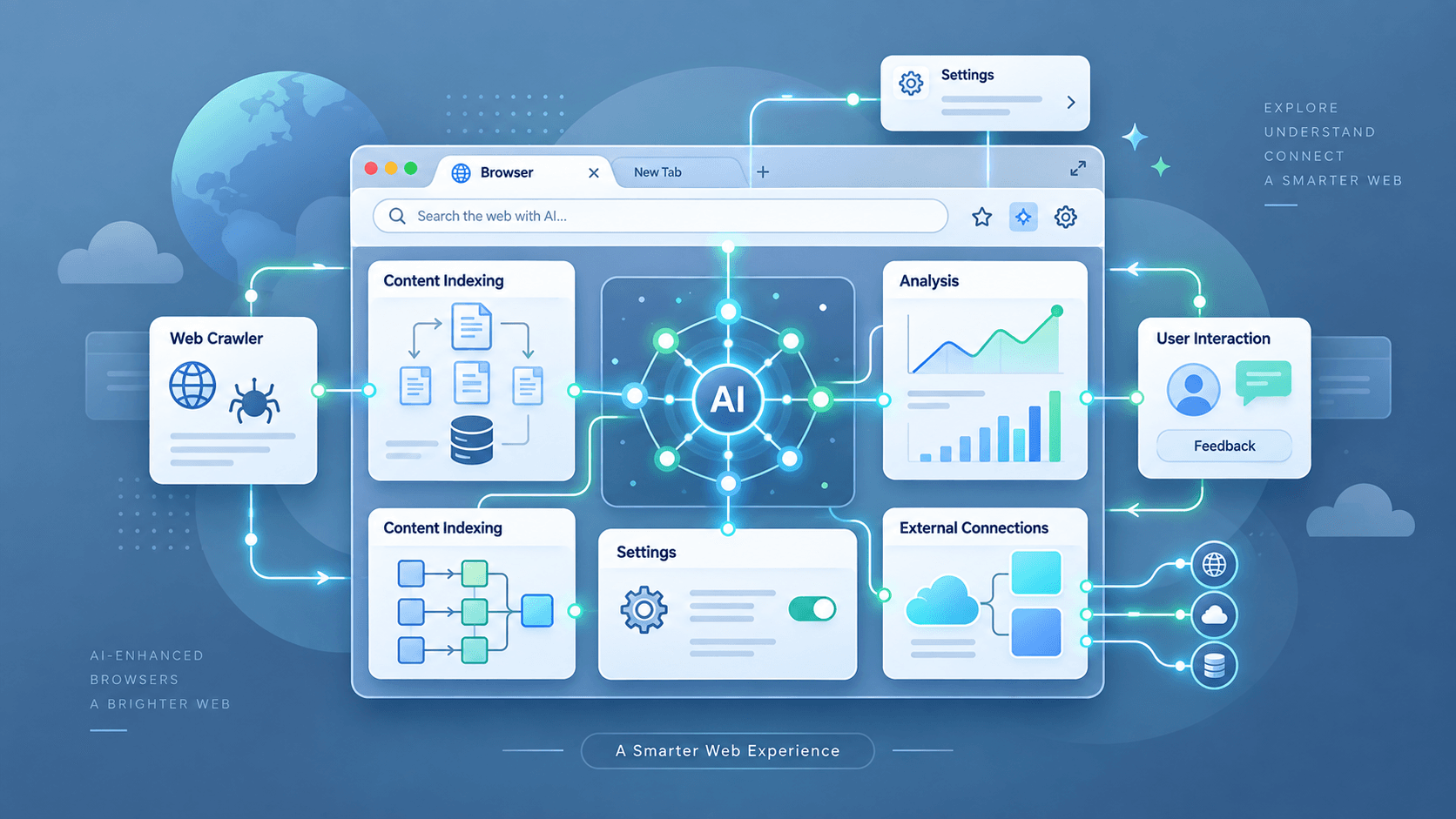
An AI agent combines the analytical reasoning of modern foundation models with operational tool execution. Agents operate through an iterative loop of perception, planning, tool usage, and evaluation. When given a high-level goal, an agent formulates its own execution plan, breaks the objective down into sub-tasks, selects appropriate application programming interfaces (APIs) or enterprise tools, inspects intermediate outputs, and corrects its approach if an error occurs. This dynamic reasoning capability transforms software from a digital tool that human workers must manipulate into an autonomous collaborator that executes complex business workflows.
High-Value Enterprise Use Cases in the UAE and GCC Markets
In high-growth economic hubs like Dubai, Abu Dhabi, and the broader GCC region, businesses operate in fast-moving, multijurisdictional environments characterized by rapid digital transformation, complex trade regulations, and demanding customer expectations. Deploying AI agents for business yields the highest enterprise value when applied to workflows that involve high volumes of semi-structured data, multi-system coordination, and variable decision pathways.
Dynamic Supply Chain & Customs Documentation Management
Logistics and import-export enterprises in the UAE frequently handle multi-lingual, semi-structured shipping manifests, bills of lading, and regulatory compliance certificates. Traditional systems struggle with document layout variances across international suppliers. An autonomous logistics agent can ingest varied documentation, verify line items against customs databases, check real-time port authority updates via API, generate accurate declaration filings, and automatically flag regulatory anomalies to compliance officers before shipping delays occur.
Automated Financial Reconciliation & Anomaly Resolution
Enterprise finance departments allocate considerable manual labor to cross-referencing ledger entries, bank statements, invoice line items, and payment gateway logs. AI finance agents continuously monitor transaction feeds, automatically reconcile multi-currency payments, identify discrepancies, query suppliers for missing invoice details via context-aware email protocols, and compile audit-ready reconciliation journals with complete trace logs.
Intelligent Customer Lifecycle & Operational Support
While basic customer inquiries can be handled by standard bots, complex enterprise support demands agentic capabilities. In sectors like commercial real estate, telecommunications, or luxury retail, an AI support agent can investigate user portal logs, check CRM history, assess tier-level SLAs, process account credits within defined financial guardrails, and initiate technician dispatch orders in field service platforms without requiring human intervention for routine operational escalations.
System Architecture and Integration Requirements
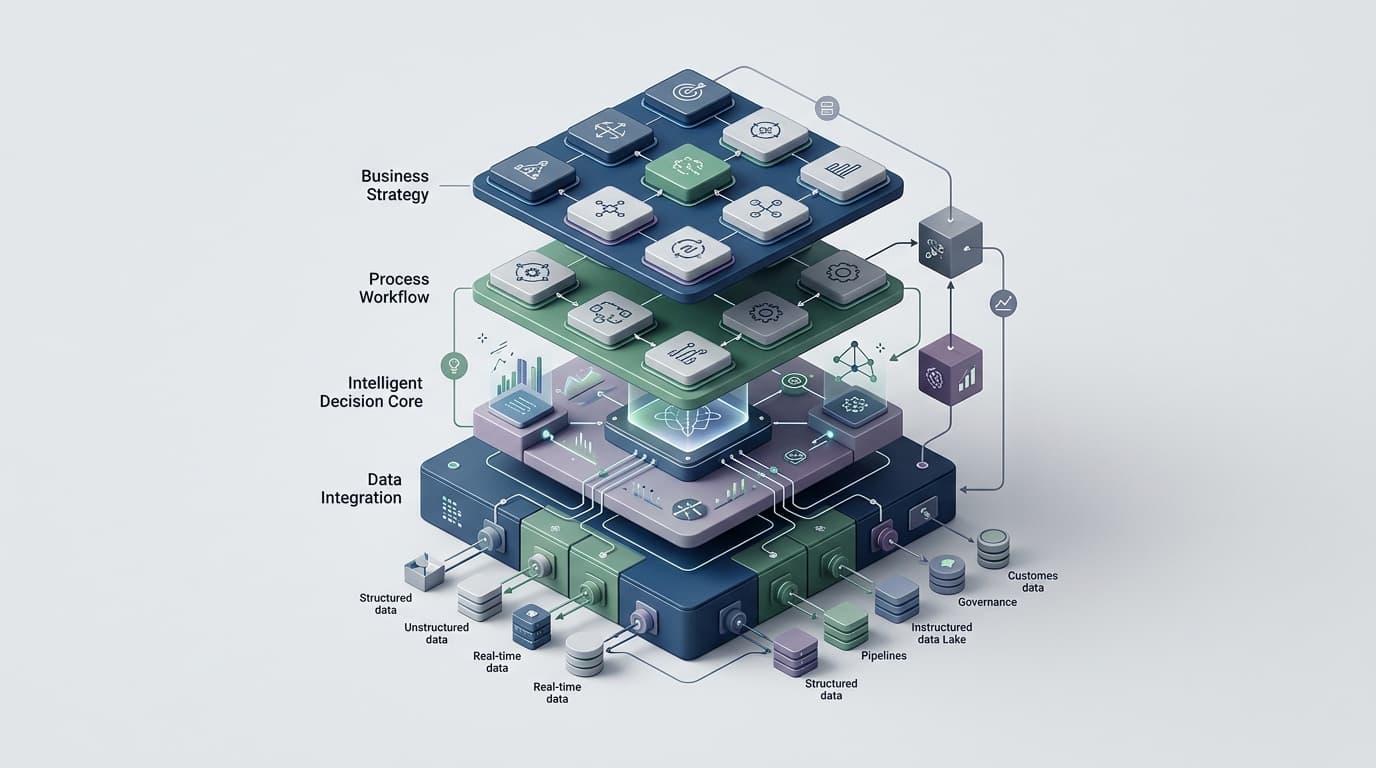
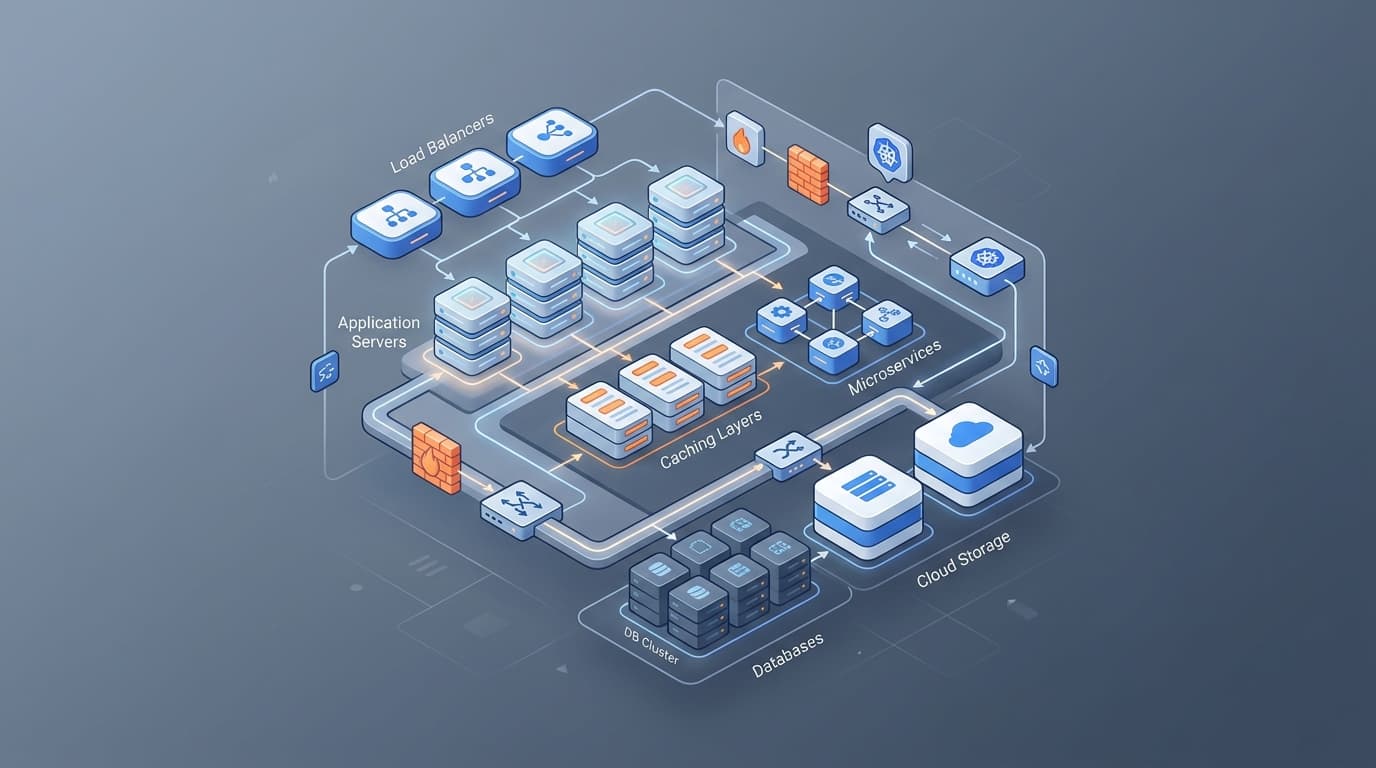
Deploying autonomous capabilities within an enterprise technology environment requires robust cloud infrastructure, structured API management, and disciplined data orchestration. AI agents do not operate in isolation; their functional utility depends directly on the quality and accessibility of the underlying IT ecosystem.
Enterprise API Layer: Agents require reliable, programmatic access to corporate applications including CRM, ERP, core banking, and database engines. Modern RESTful or GraphQL endpoints with strict access tokens form the fundamental interface through which agents observe and act upon systems.
Vector Databases & Retrieval Augmented Generation (RAG): To reason effectively about organizational domain knowledge, agents rely on high-performance vector databases. These databases index technical documentation, contract archives, and policy guidelines, allowing agents to retrieve semantic context in milliseconds.
State Management & Memory Infrastructure: Complex workflows require agents to maintain persistent state across multi-hour or multi-day operational cycles. Robust state stores track what sub-tasks have been completed, what API calls were dispatched, and what dynamic variables were recorded.
Model Orchestration & Fallback Frameworks: Enterprise deployments utilize multiple model architectures depending on task complexity. Lightweight, specialized models execute routine classification or data extraction tasks to manage cloud computing costs, while larger reasoning models handle multi-step planning and edge-case resolution.
Governance, Risk Mitigation, and Human Oversight
Granting software autonomous authority to modify production databases, initiate financial transactions, or communicate directly with external clients introduces non-trivial operational risks. Establishing formal governance frameworks and robust security parameters is essential for enterprise safety.
The foundational principle of responsible agent deployment is the establishment of clear operational guardrails. Organizations must define strict boundaries regarding what actions an agent can execute autonomously versus actions that require mandatory human approval. This architectural pattern, known as Human-in-the-Loop (HITL), ensures that high-risk operations—such as approving wire transfers above a specific financial threshold, deleting critical records, or issuing legal binding notices—are staged as pending proposals awaiting human sign-off within an executive dashboard.
Furthermore, security architectures must implement Role-Based Access Control (RBAC) specifically scoped for AI agents. An agent tasked with customer ticket routing should never possess credential permissions to access raw employee payroll records or administrative infrastructure configurations. Every API call, reasoning step, and memory lookup performed by an agent must be recorded in immutable, structured system logs to facilitate security audits, regulatory compliance, and post-execution performance reviews.
Implementation Strategy: A Pragmatic Roadmap for Executives
To achieve meaningful ROI from AI agents for business without exposing the organization to security flaws or project fatigue, executive teams should adopt a phased, risk-managed deployment methodology.
Process Auditing and Workflow Selection: Identify business workflows characterized by repetitive manual multi-system data transfer, structured logic mixed with semi-structured inputs, and clear success metrics. Avoid attempting to automate highly ambiguous, purely creative, or strategic governance functions during initial stages.
Infrastructure Preparation and Data Cleanup: Standardize internal data sources, secure legacy API endpoints, and establish clean vector index pipelines. An agent's operational quality is strictly constrained by the clarity of the underlying enterprise data.
Controlled Sandbox Pilot: Build and test the AI agent within a isolated sandbox environment using historical production data. Stress-test the agent against deliberate edge cases, malformed data inputs, and system API timeout scenarios to observe its error-handling behavior.
Phased Deployment with HITL Oversight: Roll out the agent into live production under strict Human-in-the-Loop constraints. Require human operational managers to review and approve all agent recommendations during the initial deployment phase.
Autonomous Scaling & Continuous Monitoring: As operational confidence and empirical accuracy metrics pass predetermined safety thresholds, systematically lower human intervention gates for routine actions while retaining active monitoring dashboards for system anomalies.
The Operational Horizon
AI agents represent a fundamental shift in software architecture, moving enterprise IT from passive administrative utilities to active operational infrastructure. Organizations across the UAE and global markets that systematically modernize their data foundations, establish rigorous safety guardrails, and target high-friction, multi-system workflows will capture significant operational efficiencies. By focusing on practical engineering frameworks, integration realities, and disciplined governance rather than market hype, technology leaders can build resilient, intelligent enterprises capable of scaling effortlessly in an increasingly digital global economy.
Frequently Asked Questions
How do AI agents differ from traditional Robotic Process Automation (RPA)?
Traditional RPA relies on deterministic, pre-scripted rules to execute fixed tasks across static user interfaces. It breaks when encountering unstructured data or workflow variations. AI agents utilize advanced foundation models to reason, handle context ambiguity, evaluate multi-step options, and autonomously choose tools or APIs to solve variable operational challenges.
What infrastructure is required to deploy AI agents in an enterprise environment?
Enterprise agent deployment requires a modern cloud infrastructure featuring secure API layers connecting existing CRM/ERP systems, high-performance vector databases for context retrieval, dynamic state management stores for long-running workflows, and central orchestration software with strict logging and security access controls.
How can organizations prevent autonomous AI agents from making high-risk errors?
Risk mitigation relies on Human-in-the-Loop (HITL) architecture, granular Role-Based Access Controls (RBAC), and hardcoded financial or operational execution limits. High-risk operations—such as financial transactions or critical database modifications—are queued for human verification before final execution.
Where do AI agents deliver the immediate operational value for GCC businesses?
In the GCC market, high-value deployments include cross-border trade and customs documentation processing, multi-currency financial reconciliation, multi-system inventory and supply chain coordination, and advanced enterprise customer operational support.